
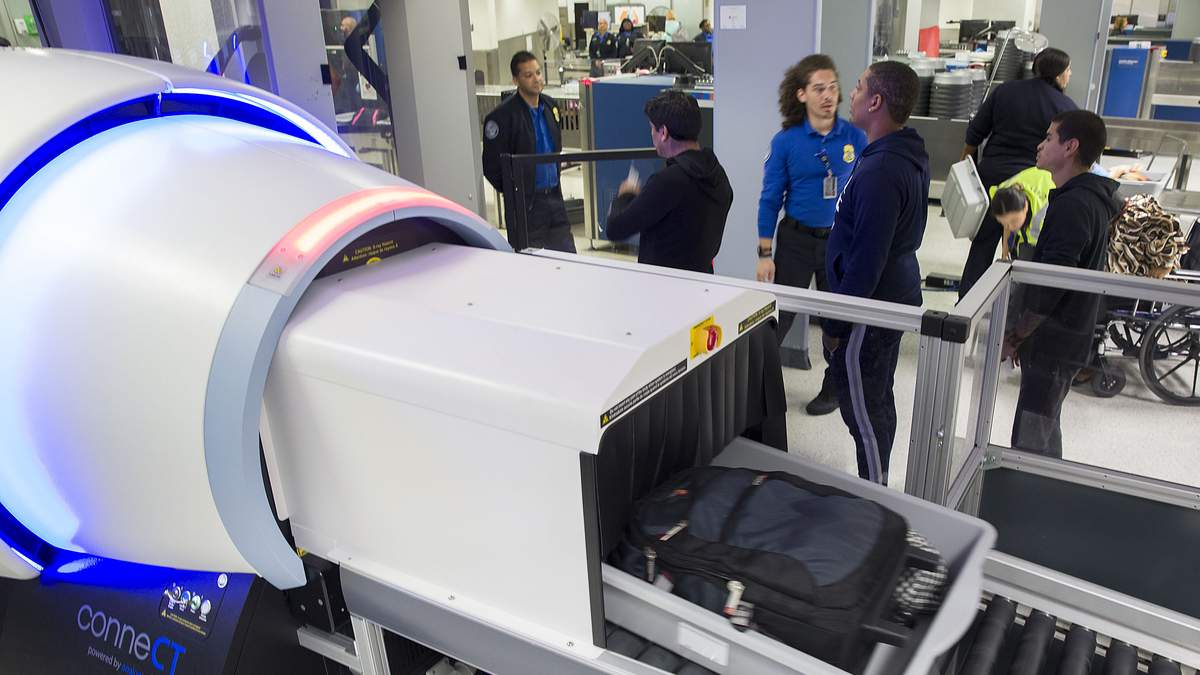

The Transportation Security Administration (TSA) is implementing a significant $781 million upgrade to its scanners at Los Angeles International Airport (LAX), just in time for the peak of summer travel.
This upgrade introduces advanced 3D computed tomography scanners, which will replace the traditional X-ray systems, providing a more efficient and streamlined security process for travelers.
According to SimpleFlying, these new scanners allow TSA officers to digitally rotate and zoom into bags, eliminating the need for passengers to remove items like laptops, tablets, and approved liquids from their carry-ons. This change is expected to reduce the hassle and time spent at security checkpoints.
However, the introduction of these scanners also means that carry-on size enforcement will become stricter. The new scanners have smaller entry tunnels, so oversized bags may be pulled aside before screening begins. The standard domestic carry-on limit is 22 inches by 14 inches by 9 inches, and this will now be more strictly adhered to.
As reported by KTLA, the goal of this nationwide rollout is to create a smoother process at busy airports, especially during the busy summer months when millions of travelers are moving across the U.S. for vacations and FIFA World Cup-related trips.
The TSA’s program, valued at $781.2 million, aims to enhance security efficiency and passenger experience across major U.S. airports, with LAX being one of the first to benefit from this technological advancement.
Recent Comments