
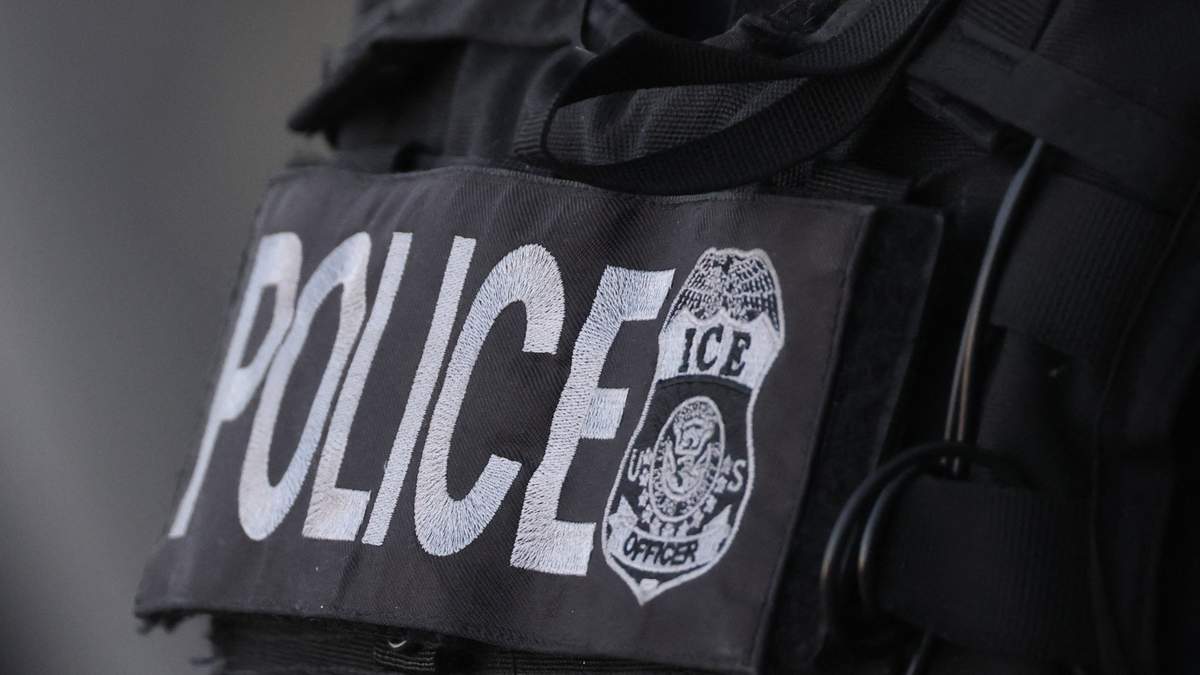

Federal immigration agents reportedly used racial slurs, including “wet” and “tonks,” to target individuals during sweeps in Los Angeles last year.
This information emerged from text messages cited in a recent court filing in the Vasquez Perdomo vs. Noem case, where plaintiffs are seeking to bar agents from racial profiling.
The motion for a preliminary injunction, filed on Monday, argues that agents conducted an “ongoing campaign of suspicionless and discriminatory detentive stops” across the Central District of California. This continued even after the high-profile street raids of summer 2025 had ended. According to a deposition from one ICE agent, “We’re [still] doing the same thing [as ‘Operation at Large’] just with a different name.”
The filing includes evidence gathered over months of discovery, such as body camera footage and agent depositions, ordered by U.S. District Judge Maame Ewusi-Mensah Frimpong. This followed the U.S. Supreme Court’s stay of an earlier temporary restraining order in the case last September. The CalMatters report highlights text messages where agents used derogatory terms like “tonks” and “wet” to describe individuals they targeted.
Attorneys from the American Civil Liberties Union (ACLU) and other advocacy groups argue that this evidence contradicts the government’s claims that agents relied on specific intelligence rather than race. They assert that the agents’ practices were condoned by agency leadership and that these actions violate constitutional protections against unreasonable search and seizures.
The court filing also reveals a directive from May 2025, instructing Immigration and Customs Enforcement (ICE) officers to “turn the creativity knob up to 11” and arrest more “collaterals”—individuals not originally targeted but encountered during operations. The ACLU’s Mayra Joachin stated that the evidence shows a pattern of racial profiling, emphasizing the need to end these practices.
Despite the filing, many agents involved in the Los Angeles raids have yet to turn over their cell phones, hindering the investigation. The federal government has been slow to comply with a court order to image the phones, with only a fraction of the 1,400 involved agents having volunteered their devices.
The case continues to unfold, with a hearing scheduled for September 24, 2026, to address the motion for a preliminary injunction.
Recent Comments