
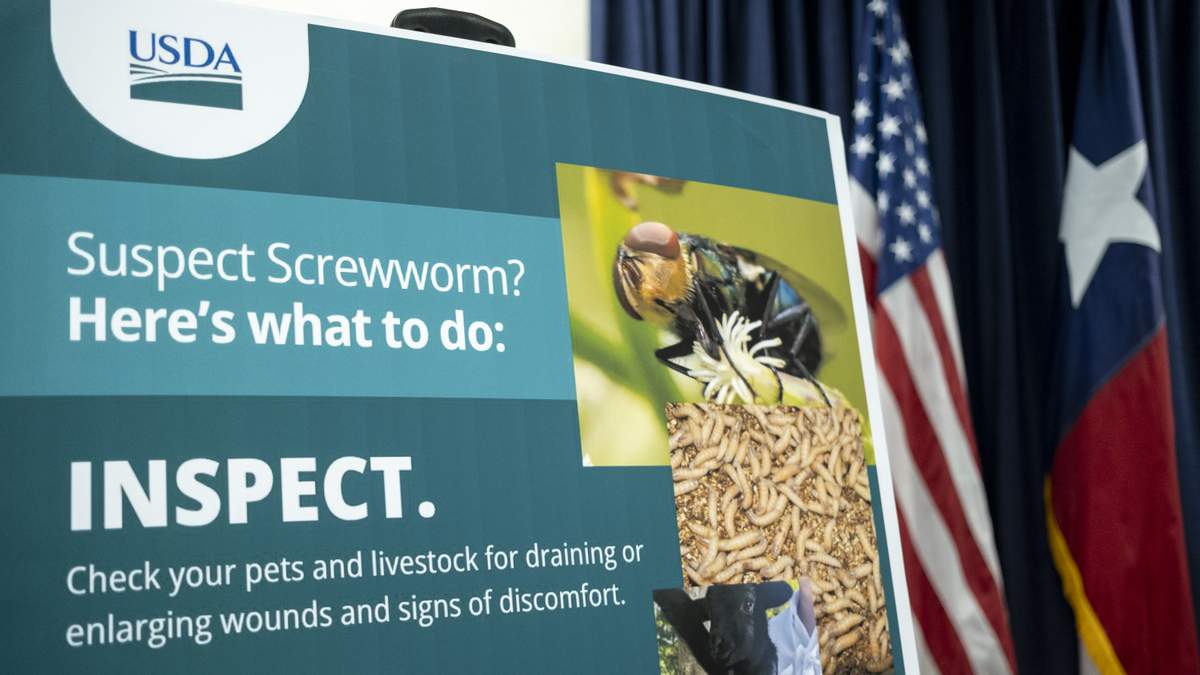

Canada has imposed restrictions on livestock imports from the United States following the discovery of a second case of New World screwworm in Texas. The U.S. Department of Agriculture (USDA) confirmed the latest case in a month-old calf in Zavala County, Texas, on Friday (June 5). This parasite, which feeds on the living tissue of animals, poses a significant threat to livestock.
The Canadian Food Inspection Agency announced that it will temporarily halt imports of cattle, horses, and other livestock originating from or present in Texas within 21 days prior to entering Canada. The agency emphasized that while the screwworm is unlikely to establish itself in Canada due to the colder climate, precautionary measures are necessary during the summer months.
The New World screwworm, eradicated from the U.S. in 1966, has resurfaced, prompting a robust response from federal and state officials. A control zone has been established around the affected area, and the USDA has initiated aerial operations to release sterile screwworm flies to curb the pest’s population. USDA Under Secretary Dudley Hoskins stated, “USDA has not wasted any time in this fight, we have defeated New World screwworm before, and we will do it again.”
Texas Governor Greg Abbott declared a state of disaster in response to the outbreak, authorizing the use of state resources to combat the infestation. Abbott warned that the screwworm is likely to spread over the summer and urged vigilance among livestock owners.
Despite the outbreak, USDA officials assured that the U.S. food supply remains safe, as screwworms do not infest meat or other food products. However, the restrictions have raised concerns within the North American livestock industry, given the significant trade between the U.S. and Canada.
The USDA is collaborating with Mexican and Central American authorities to monitor and slow the screwworm’s progression. The agency is also investing in sterile fly production and releases to prevent a wider outbreak.
Recent Comments