
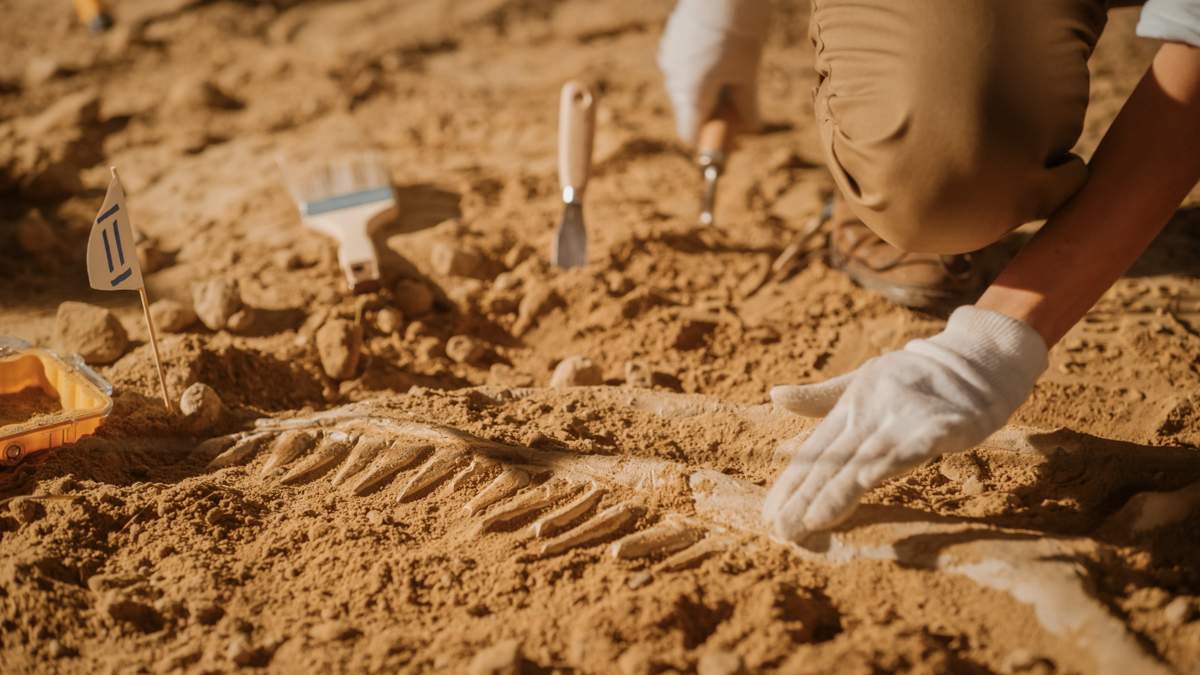

Researchers have discovered the largest-known dinosaur in Southeast Asia, named Nagatitan chaiyaphumensis, in Thailand. This sauropod, a plant-eating dinosaur with a long neck and tail, lived approximately 113 million years ago during the Early Cretaceous period. The dinosaur measured about 90 feet long and weighed between 25 and 30 tons, comparable to more than four large African elephants.
The fossils were first found by a local resident in 2016 in Chaiyaphum province. Excavations, led by Thitiwoot Sethapanichsakul, a Ph.D. student at University College London, resumed in 2024 after initial funding challenges. Researchers unearthed parts of the spine, rib, pelvis, and legs, including a nearly 6-foot-long front leg bone. Although the full skeleton wasn’t recovered, these findings allowed scientists to estimate the dinosaur’s size and characteristics.
Nagatitan chaiyaphumensis is named after the mythological Naga serpent and the province where it was discovered. The dinosaur’s discovery provides insight into sauropod diversity in Southeast Asia, a region where few such fossils have been found. The species belongs to the Euhelopodidae subgroup, known for having bones with air sacs that lighten their skeletons.
The environment during the Early Cretaceous was likely semi-arid, with rivers teeming with crocodiles and fish. The largest predator was a relative of the giant African meat-eating dinosaur Carcharodontosaurus, but it was dwarfed by Nagatitan. This discovery sheds light on the evolutionary trends of sauropods, which grew larger over time.
The research, published in the journal Scientific Reports, highlights the potential for more dinosaur discoveries in Thailand.
Recent Comments