
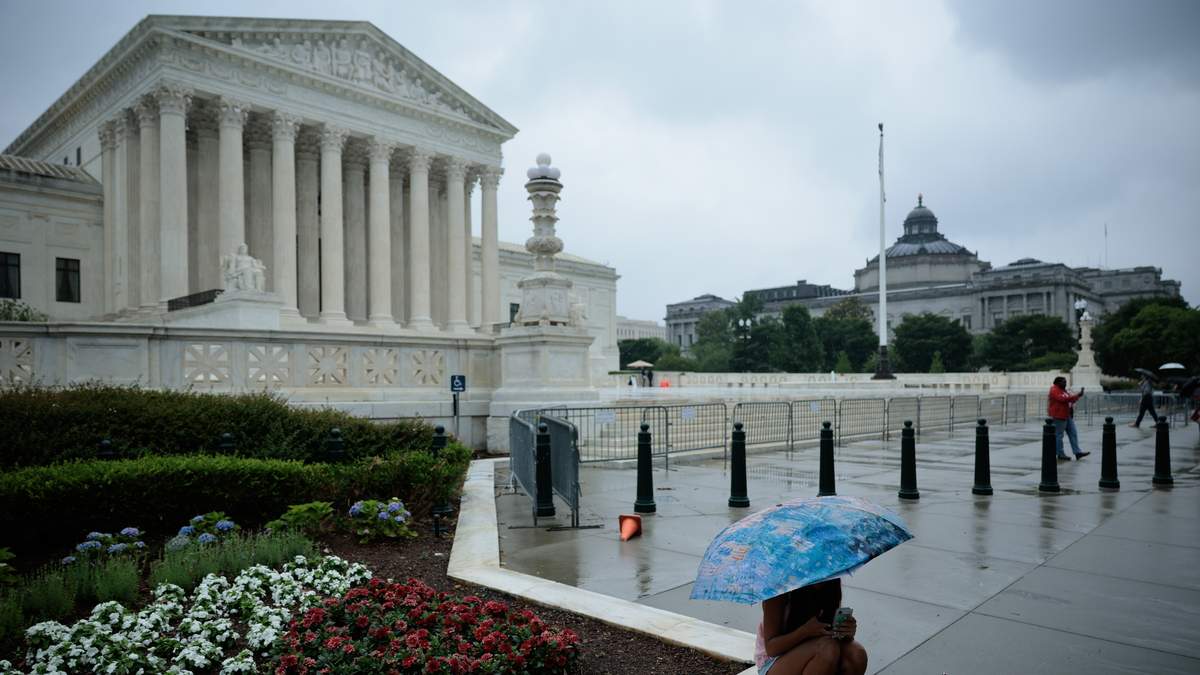

The Supreme Court ruled on Tuesday (June 23) against Damon Landor, a former Louisiana inmate, who sought to sue prison officials for cutting off his dreadlocks, a violation of his Rastafari religious beliefs. The court’s 6-3 decision determined that the Religious Land Use and Institutionalized Persons Act does not allow for monetary damages against individual officials, even when rights are violated.
Landor’s case arose from a 2020 incident at the Raymond Laborde Correctional Center in Cottonport, Louisiana, where his dreadlocks were forcibly cut. Despite carrying a court ruling that supported his religious rights, prison officials disregarded it, leading to a confrontation where guards restrained Landor and shaved his head.
Justice Neil Gorsuch, writing for the majority, stated that the law does not authorize lawsuits against individual officers. The decision aligns with previous rulings by lower courts, which also found that the law cannot hold violators financially responsible. According to KJRH, the court refused to apply the rationale from a 2020 decision that allowed Muslim men to sue over their inclusion on the FBI’s no-fly list under a similar statute.
In her dissent, Justice Ketanji Brown Jackson argued that the ruling diminishes incentives for state prison officials to comply with federal law. She emphasized the importance of legislative protection for religious rights, joined by her two liberal colleagues.
The state of Louisiana has since amended its prison grooming policy to prevent similar incidents. The Rastafari faith, rooted in 1930s Jamaica, emphasizes a return to Africa and was popularized globally by musicians like Bob Marley and Peter Tosh.
Recent Comments