
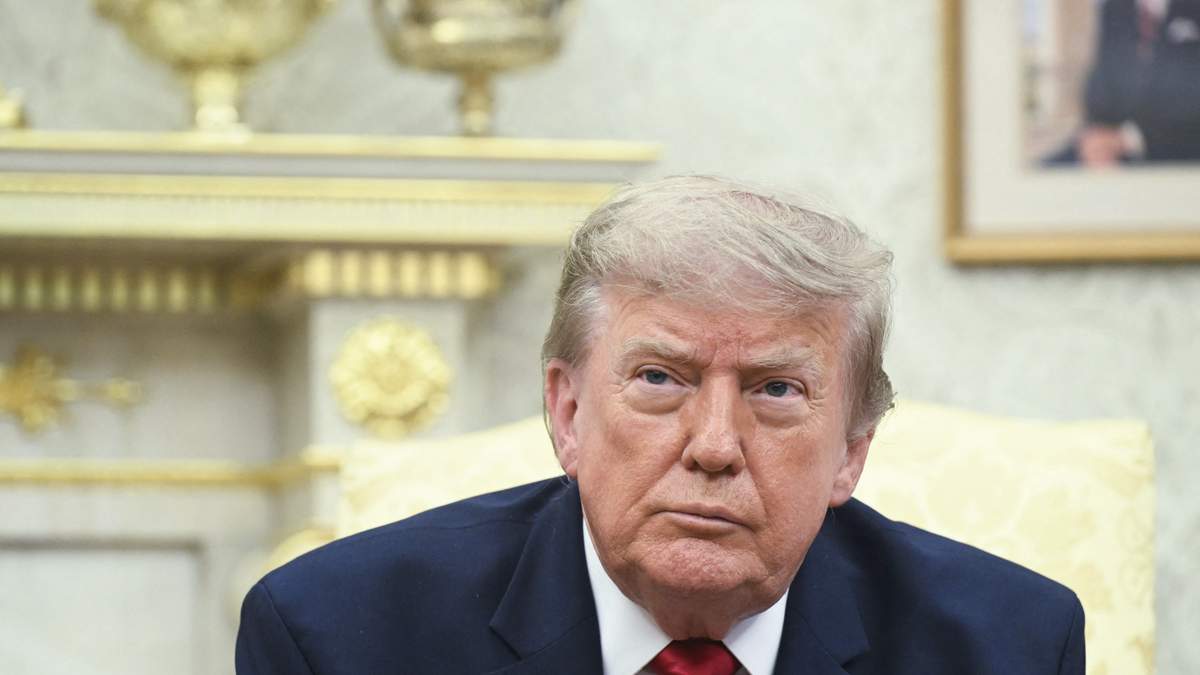

President Donald Trump stated Tuesday (July 15) that he is not looking to negotiate with Iran at this time, calling the Iranian regime “evil” and blaming the newest Iranian delegation for obstructing a potential deal. Despite his comments, discussions between the two nations continue behind the scenes.
In an interview with Fox News, the president expressed frustration with the Iranian leadership. “Well, now, I don’t want to negotiate now. I said, ‘Let’s not negotiate,'” Trump told reporter Trey Yingst. “Three days ago, we had a deal.”
However, Trump confirmed that his representatives had spoken with Iranian officials as recently as “an hour ago” before the interview. While he did not elaborate on the content of those conversations, the president maintained that the Iranians are eager to reach an agreement. “They want to make a deal, but every time they make a deal, they break it,” Trump said. “They don’t want to die. People don’t want to die.”
The latest tensions follow escalating military strikes this week between the United States and Iran. According to U.S. Central Command, American forces have hit approximately 170 Iranian military targets since Tuesday (July 8) in response to attacks on commercial vessels transiting the Strait of Hormuz. The U.S. has accused Iran of violating the memorandum of understanding by attacking these vessels and preventing their safe passage through the critical waterway.
The memorandum, signed by Trump and the Iranian president on Tuesday, June 17, sought to pause fighting and give both nations time to reach a more complete solution to the conflict. The 14-point agreement called for an immediate end to fighting on all fronts, the lifting of the U.S. naval blockade on Iran, and the reopening of the Strait of Hormuz.
However, the ceasefire has deteriorated rapidly. On Wednesday (July 9), Trump told reporters aboard Air Force One that the U.S. had “just hit them very hard.” He added, “I say we hit them 20 to 1 – every time they hit us, we’re going to hit them 20, and we did it last night.”
When asked whether the U.S. and Iran are returning to a full-scale military conflict, Trump responded, “I don’t know,” before adding that if the war resumed the U.S. would “win it very quickly.”
According to Al Jazeera, Iran’s foreign ministry spokesman denied that new negotiations had been requested with the U.S., saying only that Tehran had accepted a visit by a Qatari delegation seeking to find a way through the impasse. Iran’s lead negotiator and Parliament Speaker, Mohammad Bagher Ghalibaf, signaled Friday (July 10) that officials were still willing to pursue diplomacy. “At any moment the Americans betray the understanding, we are ready for full-scale defense and will stand firm against them and defend the rights of the Iranian people,” he said.
The memorandum was meant to address the future of Iran’s nuclear program, the unfreezing of Iranian assets, and the future administration of the Strait of Hormuz within 60 days of its signing. Both Washington and Tehran have incentives to return to diplomacy, as the war is politically unpopular in the U.S. and threatens to undermine Trump’s Republican Party in November’s midterm elections. Iran’s already struggling economy has also suffered throughout the conflict.
Military analyst Alex Alfirraz Scheers told Al Jazeera that any talks were likely to yield “very little” unless trust can be revived. “I think in many ways they’re almost symbolic,” he said. “Until there is genuine momentum with regards to trust-building and confidence-building, in the current context these talks will likely lead nowhere.”
Recent Comments