
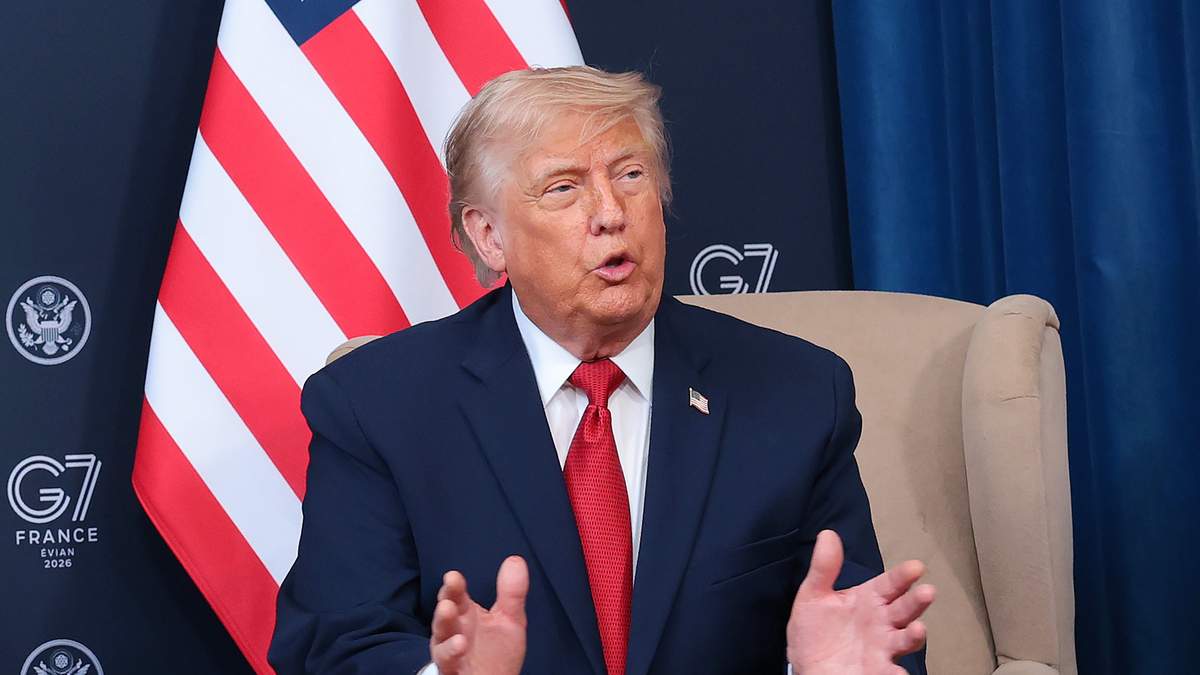

President Donald Trump announced the signing of a memorandum of understanding (MOU) with Iran while exiting a dinner at the Versailles Palace in France, concluding the G7 Summit. The White House confirmed that the MOU is now “in effect.” This agreement includes the reopening of the Strait of Hormuz, easing financial restrictions against Iran, and outlines future discussions regarding Iran’s nuclear program.
The MOU, which President Trump and Vice President JD Vance electronically signed, aims to end hostilities and set a 60-day negotiation period on Iran’s nuclear activities. According to The Hill, President Trump emphasized that the agreement is not final, stating, “If they don’t honor that, we’ll probably go back to bombing them until they honor it.” The formal signing ceremony, initially planned for Switzerland, remains uncertain.
The agreement, known as the Islamabad Memorandum, also includes provisions for Iran to dilute its enriched uranium stocks and allows the country to sell oil freely again. The draft outlines steps toward lifting U.S. sanctions and a $300 billion reconstruction fund for Iran. The U.S. will waive some sanctions upon signing, but not eliminate them entirely.
The MOU has sparked mixed reactions. Many G7 leaders expressed relief over the reopening of the Strait of Hormuz, crucial for global oil supply. However, there are concerns about the agreement’s permanence and potential legal implications. Axios reports that the deal was mediated by Qatar and Pakistan, and is expected to be called the Islamabad agreement.
Recent Comments