
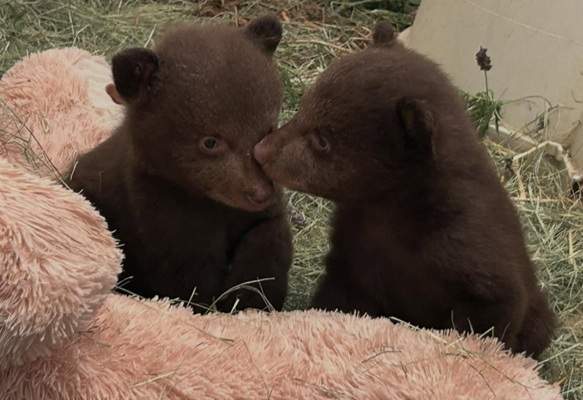

RAMONA (CNS) – Two black bear cubs orphaned in Monrovia after their mother was euthanized reached a turning point in their recovery this week as they transitioned to an outdoor habitat at the San Diego Humane Society.
The brothers are now housed in a specialized den area funded by a grant from the Ellen Browning Scripps Foundation. The enclosure features live edge wood sourced from a Ramona sawmill. Wildlife officials said the cubs will be introduced to a larger habitat once they have acclimated to their new surroundings, according to the SDHS.
The cubs arrived at the center on March 15 after the California Department of Fish and Wildlife euthanized their mother, Blondie, following two public safety incidents in Monrovia. Since then, the Humane Society’s Project Wildlife team has provided specialized care with the ultimate goal of releasing the bears back into the wild.
Blondie was killed despite pleas from the Monrovia City Council and more than 3,800 people who signed a petition seeking to spare the bear’s life.
The decision to terminate the bear followed “thorough assessment of the bear’s behavior and the circumstances of the incident,” according to state wildlife officials, who said killing an animal “is used only as a last resort when an animal poses a risk to public safety and cannot be safely returned to the wild.”
To ensure the cubs do not become too accustomed to human contact, staff members have utilized “wild-proofing” techniques. During necessary feedings and interactions, caretakers wear bear masks and animal furs treated with natural scents to mask the human smell. Staff members even crawl into the habitat to mimic the movements and behaviors of a mother bear.
“Moving outside is a big step,” said Autumn Welch, wildlife operations manager at San Diego Humane Society. “The cubs are gaining confidence, exploring and learning the skills they’ll need to survive on their own.”
Now about 4 months old, the cubs are exhibiting increased independence, officials said. Their diet has progressed from spoon-fed formula to gruel and solid food, including a preference for fruit and plants. The habitat has also been outfitted with mulberry and pine to encourage natural foraging behaviors.
The SDHS is seeking public donations to cover the extensive resources required for the bears’ long-term rehabilitation. Contributions can be made at sdhumane.org/monroviabears.
Recent Comments