
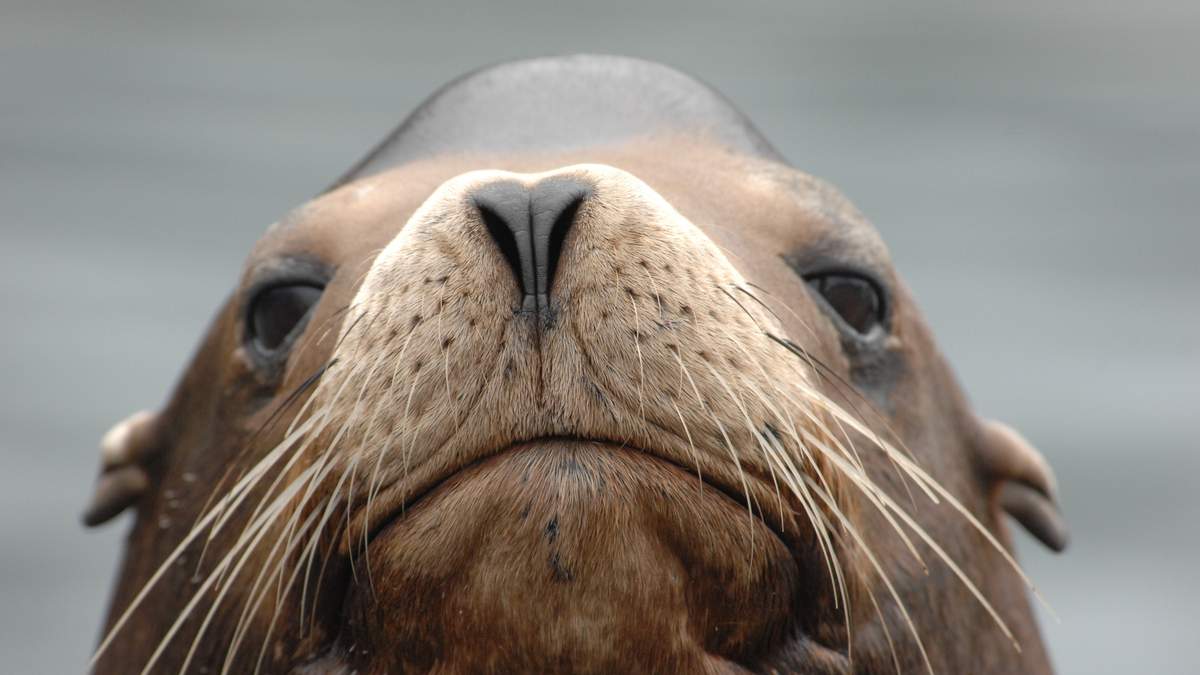

A massive Steller sea lion has captured the hearts of San Franciscans after taking up residence at Pier 39 roughly a month ago.
The 2,000-pound marine mammal, affectionately dubbed “Chonkers” by locals, is now the waterfront’s most famous resident.
Chonkers, who is approximately three times the size of the California sea lions typically found in San Francisco Bay, made his debut at the popular tourist destination in mid-March.
The name Chonkers originated from San Francisco-based Reddit user Des Tan, who coined it as a play on “chonky,” internet slang for humorously overweight. The moniker quickly spread across social media, with online commenters obsessively tracking the sea lion’s every move. One Redditor even joked that “Chonkus Maximus” was his Latin name.
Laura Gill, public programs manager with the Marine Mammal Center, confirmed that Chonkers is indeed a Steller sea lion, a species more commonly found in Washington State or Alaska. Her team has been monitoring the giant since March 13. Stellers are lighter-colored, yellowish creatures that dwarf their California cousins.
“There’s just a lot of food right now,” Gill explained, suggesting that abundant seafood likely lured Chonkers to the Bay Area.
Last week, Chonkers thrilled more than 100 onlookers when he launched his one-ton frame out of the water and onto one of the floating docks. The dramatic landing sent two 700-pound California sea lions scrambling into the frigid bay waters. The crowd erupted in a mixture of awe and appreciation.
Sheila Chandor, harbormaster for the Pier 39 marina, said the force of Chonkers’ landing briefly compressed the dock structure down to water level. “We didn’t build those floats for 2,000-pound animals,” she admitted.
While Steller sea lions occasionally visit Pier 39 for a few days, Chonkers’ extended stay is unusual. “We’re a pit stop, that’s how we saw ourselves,” Chandor said.
Despite his intimidating size, Chonkers has integrated well with the local sea lion population. Sea lions are thigmotactic creatures, meaning they are highly social and enjoy physical contact. Chonkers can often be seen sunbathing on the docks alongside his smaller companions, who bark and doze nearby.
Chonkers isn’t the first oversized sea lion to become a San Francisco celebrity. In the late 19th century, another Steller named Big Ben Butler was a local fixture at Seal Rocks near the Golden Gate Bridge. When Butler died in 1895, he was stuffed and displayed at a nearby swim complex.
The current sea lion colony at Pier 39 dates back to 1989, shortly after the Loma Prieta Earthquake, when a group of California sea lions discovered the sheltered docks and decided to stay. The location offers abundant food, protection from predators, and calm waters. “It used to be full boat slips where people had their boats parked,” Gill recalled. “But one sea lion told another sea lion…”
Today, Pier 39 can host as many as 2,000 sea lions depending on the season. Harbor staff use wooden herding boards to gently guide the animals away from boat docks and toward the 42 floats specifically built to accommodate them. Chandor admitted she’s uncertain how she would handle Chonkers if he decided to claim a boat dock. “I’m really happy to say that hasn’t been a problem we’ve had to face,” she said. “He doesn’t have anything to prove and that works in our favor.”
Local swimmers maintain a cautious relationship with the sea lions, which are known to deliver bacteria-laden bites. Vanessa Marlin, president of the nearby South End Rowing Club, said members are fascinated by Chonkers but wary of encounters in the water. “When you see a sea lion, it’s ‘Oh no, we don’t want them anywhere near us,'” she explained.
For now, Chonkers continues his leisurely stay at Pier 39, delighting tourists and locals alike with his impressive size and playful antics. Whether he’ll make San Francisco his permanent home remains to be seen.
Recent Comments