
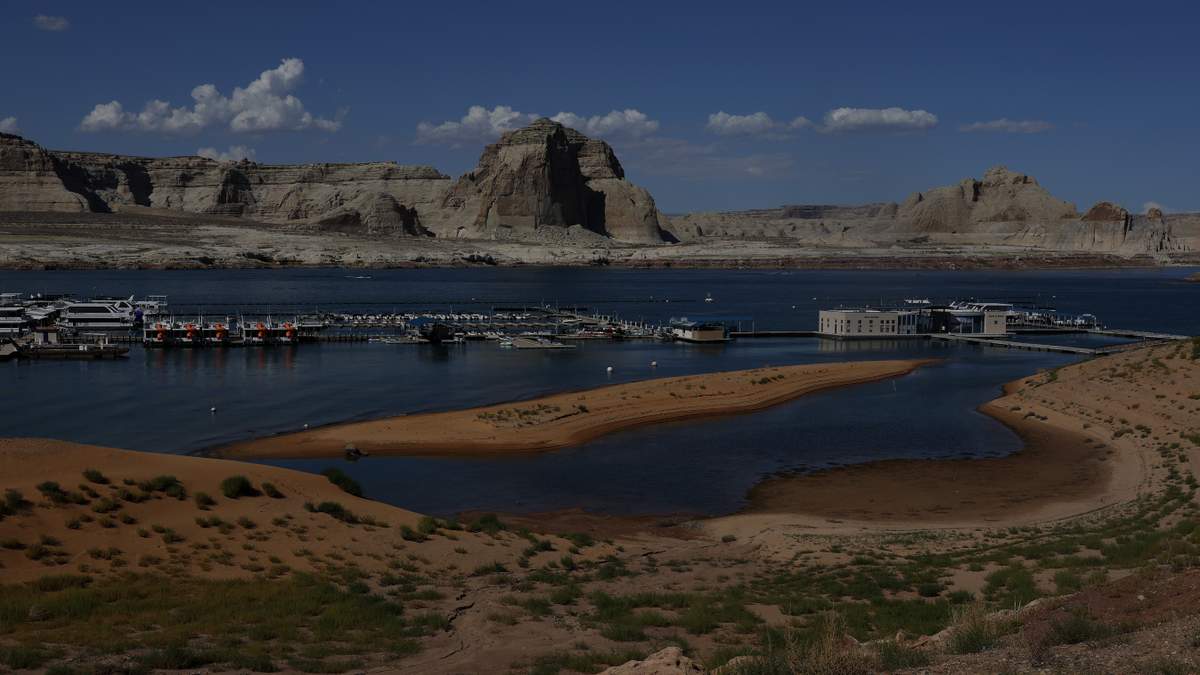

Lake Powell, a major reservoir spanning Utah and Arizona, has reached its lowest water level ever recorded as the American West continues to suffer from an extended drought. According to the Bureau of Reclamation, the lake’s elevation dropped to 3,519.91 feet on Saturday—just below the previous record of 3,519.92 feet set in April 2023. This new milestone highlights the deepening water crisis in the region, which supplies more than 40 million people with water and power.
The Colorado River Basin, which includes Lake Powell and the larger Lake Mead, has seen system storage fall to about 36% of capacity as of April. Officials say this is the result of both the lowest snowpack on record last winter and record-breaking heat in March, which drastically reduced runoff into the river system. These factors have raised serious concerns about the security of essential water and power infrastructure for the West.
Lake Powell’s decline mirrors that of Lake Mead, which also recently fell to its lowest level since being filled in the 1930s. Both lakes are critical to the Colorado River system, which irrigates millions of acres of farmland and provides drinking water to several states, tribal nations, and Mexico. The ongoing drought—now considered the region’s driest 22-year stretch in more than a millennium—has been intensified by rising temperatures and long-term overuse of water resources.
According to Lake Powell Navigator, the reservoir currently stands at just 21.6% of its full capacity, about 180 feet below its maximum level. Federal officials warn that if Lake Powell’s elevation drops below 3,490 feet, the Glen Canyon Dam may no longer be able to generate power or release water as normal, putting further strain on downstream users.
To slow the decline, the Bureau of Reclamation is releasing water from upstream reservoirs like Flaming Gorge. However, experts note that these measures may only buy time, as the rules governing water sharing between states are set to expire at the end of 2026 and negotiations for a new agreement have not yet succeeded.
Federal officials remain committed to protecting critical infrastructure and maintaining water and power supplies but caution that without major intervention or a strong winter, levels could continue to fall. In the coming weeks, the government is expected to release more details on short-term plans to address the crisis, although some experts argue that these steps might not be enough to resolve the long-term challenges facing the Colorado River basin.
Recent Comments