
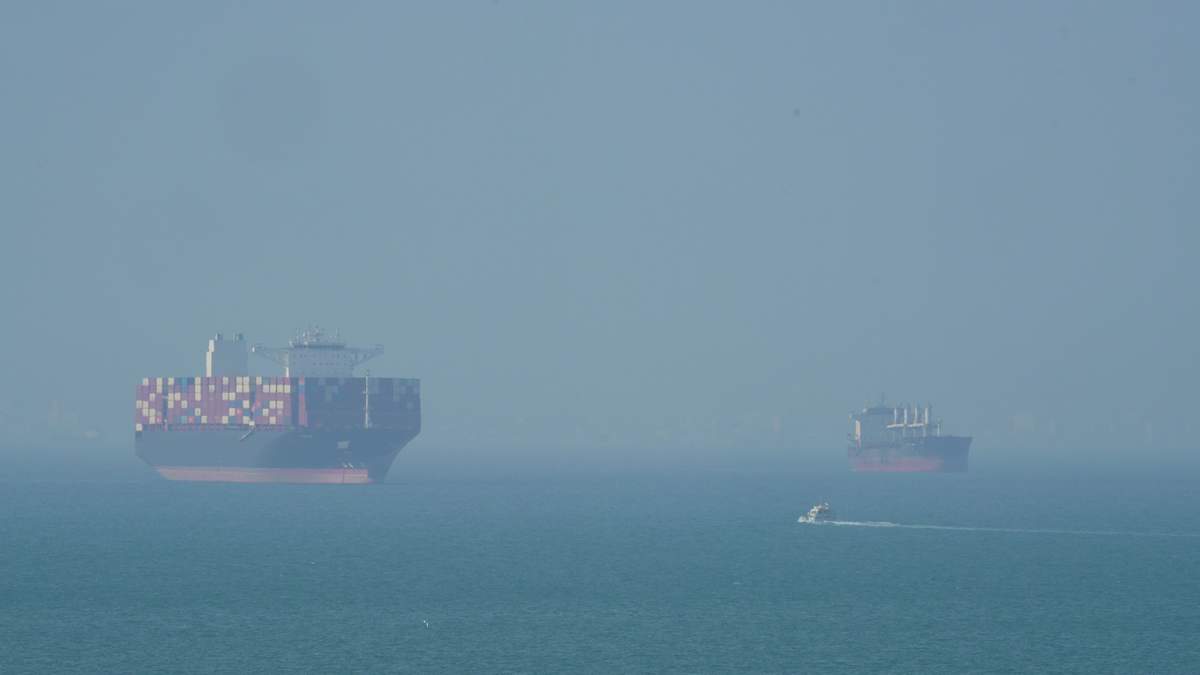

Tensions in the Strait of Hormuz escalated Monday as the United States military sank six Iranian boats after Iranian forces fired cruise missiles, drones, and small boats at US Navy ships and commercial vessels, according to US Central Command. The incident came as President Donald Trump launched a new initiative, called “Project Freedom,” to restore safe passage for commercial shipping in the vital waterway, which Iran had effectively closed since late February.
US officials reported that two American-flagged merchant ships have now successfully passed through the strait, a claim denied by Iran’s Islamic Revolutionary Guard Corps, which described the statements as “baseless” and “outright lies.” US Navy guided-missile destroyers are operating in the Persian Gulf to help restore traffic, but the situation remains tense, with Iran warning that any foreign military force attempting to enter the strait will be targeted. The United States has denied Iranian reports that a US Navy vessel was struck during the latest exchange, stating that “no US Navy ships have been struck.”
The United Arab Emirates (UAE) said Monday it had come under attack from Iranian missiles and drones for the first time since a fragile ceasefire in early April. Emirati officials reported that three Indian nationals were wounded in a fire sparked by an Iranian drone strike at the Fujairah Oil Industry Zone. The UAE also intercepted three Iranian cruise missiles, while a fourth fell into the sea. The attacks targeted oil facilities and civilian infrastructure, with the UAE government calling the strikes a “dangerous escalation” and a violation of international law.
The crisis has severely impacted the global economy. Oil prices have surged and stock markets dropped on renewed concerns about the safety of transiting the strait, through which a significant portion of the world’s energy supply is shipped. US gas prices have risen to $4.46 per gallon, with experts warning they could reach $5 if the strait remains closed. Diesel prices have also hit record highs in several states.
Iran maintains that any attempt to bypass its control over the strait is a breach of the ongoing ceasefire, and it continues to threaten further action. Iranian officials have introduced a new proposal for ending the conflict, which includes lifting US sanctions, ending the blockade of Iranian ports, and withdrawing foreign forces from the region. President Trump has expressed doubt that the proposal will lead to a deal.
The United States has enforced a naval blockade on Iranian ports since April, turning back dozens of commercial ships and cutting Iran off from vital oil revenue. Meanwhile, hundreds of ships remain stranded in the Persian Gulf, and maritime authorities have warned that rerouting through Oman’s waters is risky due to the presence of mines.
Efforts to de-escalate continue, but the risk of renewed, full-scale fighting remains high as both sides accuse each other of violating ceasefire terms. The humanitarian situation in the region is worsening, with aid organizations warning that they cannot meet the needs if the conflict expands.
Recent Comments