
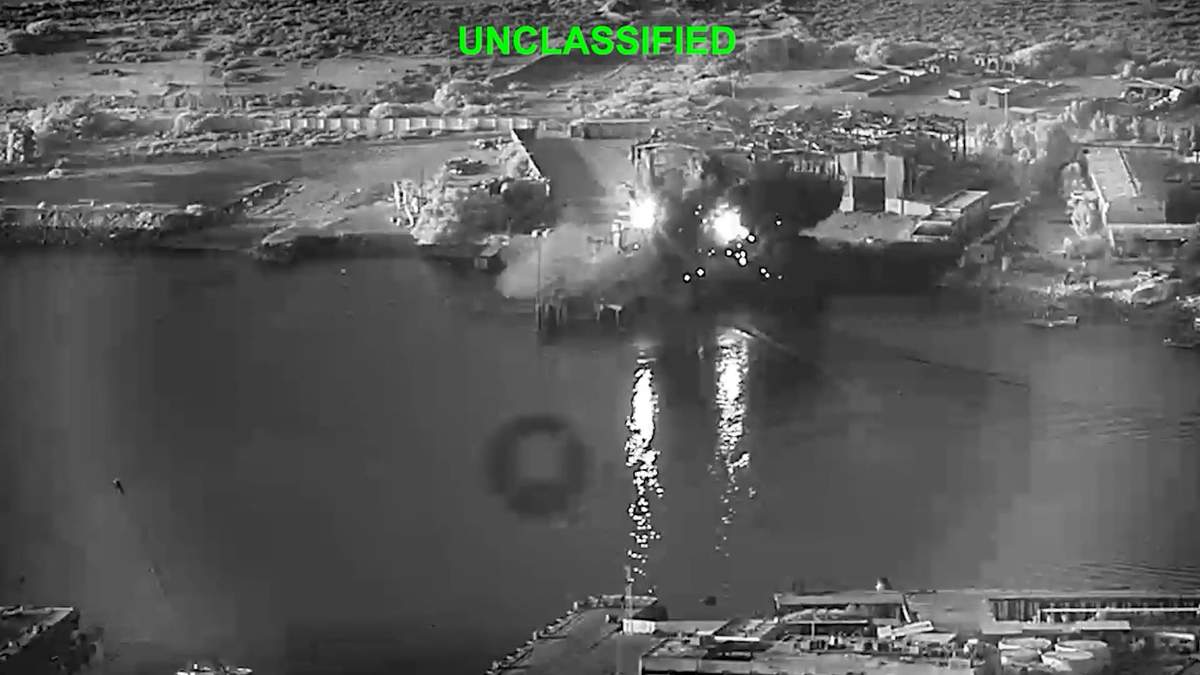

The United States military has launched a second wave of strikes against Iranian military targets, escalating tensions around the Strait of Hormuz as American forces resume a naval blockade on Iranian ports and coastal areas. According to a post from U.S. Central Command (CENTCOM) on X, the strikes are intended to degrade Iran’s ability to threaten commercial shipping and ensure vessels can safely transit through the strategic waterway. The latest round of precision attacks targeted Iranian missile and drone sites, naval capabilities, and coastal defense systems, and comes at the direction of President Donald Trump as part of ongoing efforts to hold Iran accountable for recent aggression.
As reported by Fox News, CENTCOM stated that more than 20 U.S. Navy warships and hundreds of military aircraft are now operating across the Middle East. The blockade, which began at 4 p.m. ET on Tuesday, covers all Iranian ports and oil terminals, with any unauthorized vessels subject to interception and possible capture. Commercial ships not bound for Iran are reportedly allowed to transit the strait under U.S. protection.
The renewed hostilities follow President Trump’s announcement that he is not seeking negotiations with Iran at this time. In a recent interview, President Trump said, “We’re going to hit them very hard tonight. We’re going to hit them very hard tomorrow night. We’re going to hit them very hard the night after,” referring to continued strikes unless Iran returns to the negotiating table. He also warned that U.S. attacks could expand to target Iranian power plants and infrastructure in the coming week if there is no progress in talks.
The strikes come after a series of Iranian attacks on commercial shipping, including incidents that left civilian crew members dead or injured, and missile strikes targeting U.S. bases in the region. CENTCOM commander Adm. Brad Cooper said U.S. forces are “holding Iran accountable for unwarranted aggression that continues to endanger innocent lives” as reported by The Hill.
Regional response has been swift. The United Nations has condemned the renewed fighting, warning that the closure or disruption of the Strait of Hormuz threatens the flow of food, medicines, and essential goods worldwide. Multiple Gulf countries, including Jordan, Bahrain, Kuwait, and Qatar, have protested Iranian strikes on their territories or airspace over the last several days. India also summoned Iran’s deputy chief of mission in New Delhi after attacks on two commercial ships resulted in the death and injury of Indian crew members.
Iran’s Revolutionary Guard Corps (IRGC) has responded with threats, vowing to contest U.S. actions and warning that no oil or gas will be exported from the region as long as American “aggression” continues. The IRGC claims its drone and missile attacks on U.S. facilities in Bahrain and Kuwait are retaliation for the American strikes.
The cost of the conflict is rising, with the U.S. government recently requesting $87.6 billion in supplemental funding from Congress to cover war-related expenses, according to The Hill. Energy markets have already reacted, with Brent crude oil prices rising over three percent on Monday.
The international community remains concerned that continued escalation could disrupt global shipping and energy supplies, with U.N. Secretary General António Guterres warning that “a return to full-scale hostilities would have catastrophic consequences,” as detailed by The Guardian.
Looking ahead, President Trump has signaled that U.S. strikes will continue and may intensify unless Iran agrees to new negotiations. The blockade and increased military presence are expected to remain in place for the foreseeable future as the U.S. seeks to secure shipping lanes and apply pressure on Tehran.
Recent Comments