
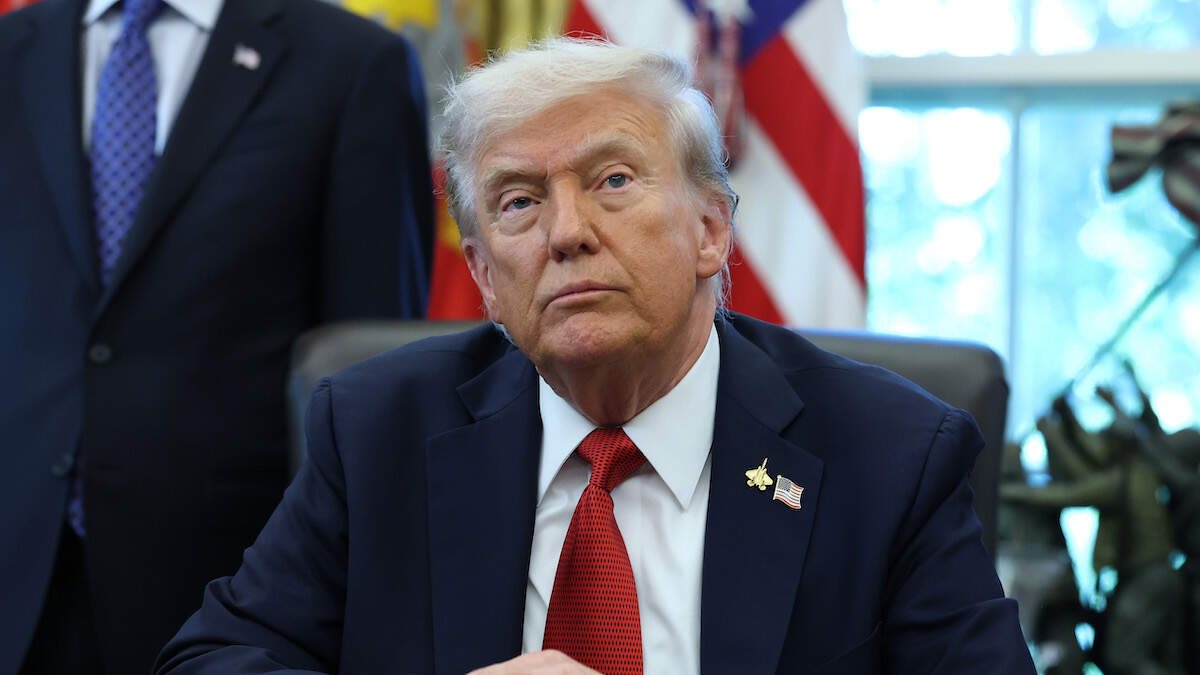

President Donald Trump‘s approval rating has hit a new low and appears to be continuing in that direction, famed polling expert Nate Silver wrote in his Silver Bulletin blog on Monday (March 30).
Trump currently has a 39.7% approval rating and a -17.4 net approval rating, both of which are new lows for his second term.
“Trump just hit a new low in our tracking. For the first time in his second term, Trump’s approval rating in our average is (just barely) below 40 percent at 39.7. And his net approval rating is -17.4, also a new low. The recent decline has been pretty steep: about 5 points of net approval over the past several weeks,” Silver wrote.
The polling expert said the most important events that shaped Trump’s approval rating are the two separate killings of American citizens Renée Good and Alex Pretti by federal agents in Minneapolis, as well as the Iran War, which he launched with Israel on February 28.
“The effect of Minneapolis on Trump’s topline numbers is more debatable. Trump’s ratings have declined on immigration, and the government’s conduct in Minneapolis was deeply unpopular with swing voters,” Silver wrote. Immigration and “border security” remain just about the only issues where Trump’s ratings remain close to breakeven, however.
“Iran has had a much clearer impact. So far, though, it’s probably less about the war itself than about the impact on gas prices, which are now at about $4 nationally, having risen by more than a dollar over the past month.”
Silver gained notoriety for successfully predicting 49 of 50 states in the 2008 presidential election, as well as former President Obama’s re-election win in 2012 and former President Joe Biden‘s win in the 2020 election. The pollster was, however, criticized for giving Hillary Clinton a 71.4% chance of winning over Trump after the former president 304 electoral college votes to win the election.
“I think people shouldn’t have been so surprised,” Silver told the Harvard Gazette in 2017. “Clinton was the favorite, but the polls showed, in our view, particularly at the end, a highly competitive race in the Electoral College. We had him with a 30 percent chance, and that’s a pretty likely occurrence. Why did people think it was much less than that? I think there are a few things.”
Recent Comments