
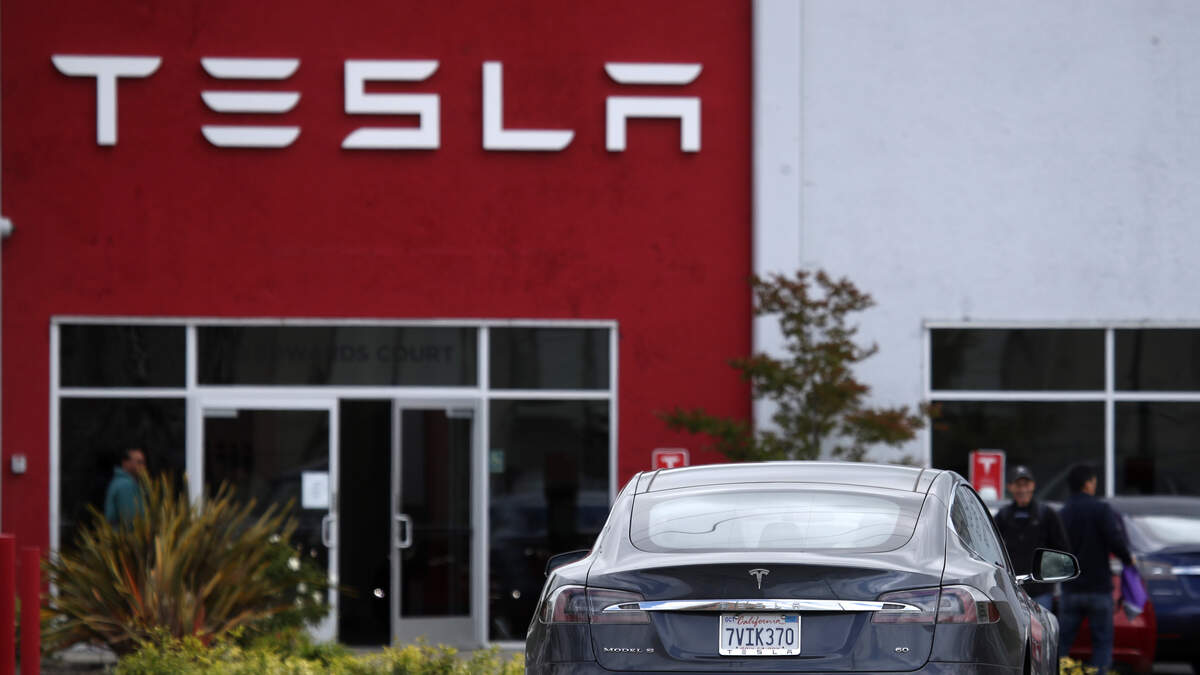

Tesla will stop producing its Model S and Model X electric vehicles as the company shifts its focus toward humanoid robots and autonomous driving technology, CEO Elon Musk announced Wednesday (January 29).
The move marks the end of an era for the two vehicles that helped establish Tesla as a dominant force in the electric vehicle market. Musk told investors and analysts that production would wind down next quarter, with the company converting its Fremont, California factory space to manufacture Optimus humanoid robots instead.
“We expect to wind down S and X production next quarter and basically stop production,” Musk said during the earnings call. “That is slightly sad, but it’s time to bring the S and X programs to an end, and it’s part of our overall shift to an autonomous future.”
The Model S, introduced in 2012, helped move electric cars from a consumer niche into the mainstream market. The Model X SUV followed in 2015. Both vehicles fueled Tesla’s rise from a startup into the world’s most valuable automaker. However, sales of the two models have declined significantly in recent years, with the newer Model 3 and Model Y now accounting for the bulk of the company’s deliveries.
Tesla delivered 1,585,279 Model 3 and Y vehicles in 2025 but only 418,227 Model S and X units, according to company data. The company also had to stop selling Model S and X in China in mid-2025 due to tariffs on imported goods.
Tesla released its financial results for the final quarter of 2025 alongside the announcement. The company reported its first-ever decline in annual revenue, with total revenue down three percent from 2024. Profits fell 46 percent last year, while revenue from car sales declined 11 percent year-over-year in the fourth quarter. Despite these challenges, Tesla topped analysts’ expectations for earnings, and its share price rose approximately two percent in after-hours trading.
The company also revealed it had invested $2 billion in President Trump ally Musk’s artificial intelligence firm xAI and would evaluate potential AI collaborations with the startup. This announcement came despite shareholder lawsuits filed in 2024 claiming xAI represents direct competition to Tesla.
Musk has long maintained that Tesla should be viewed as an AI and robotics company rather than a traditional automaker. During the call, he emphasized that autonomous vehicles would soon make traditional forms of transportation obsolete. “The vast majority of miles traveled will be autonomous in the future,” Musk said, estimating that less than five percent of miles driven will involve someone actually driving the car themselves.
The company plans to use the freed-up Fremont factory space to manufacture Optimus humanoid robots. Musk announced at the World Economic Forum in Davos, Switzerland earlier this month that Tesla will start selling Optimus to the public by the end of next year. He stated that the long-term goal is to produce one million Optimus robots in the former Model S and X production space.
Tesla CFO Vaibhav Taneja said the company expects to spend more than $20 billion this year on new production lines and AI compute infrastructure to support this transition. The company also made recent changes to its autonomous driving offerings, eliminating the option to purchase Full Self-Driving software for a one-time fee and making it subscription-only at $99 per month.
Tesla launched its robotaxi service in Austin last June and recently began offering some public rides without a safety driver. Musk said Tesla would have robotaxis operating in “somewhere between a quarter and half” of the United States by the end of the year, pending regulatory approval. The company is set to begin production on its dedicated Cybercab robotaxi in April.
Tesla will continue to sell Model S and X vehicles while supplies last and promises to support existing vehicles for as long as customers own them.
Recent Comments