
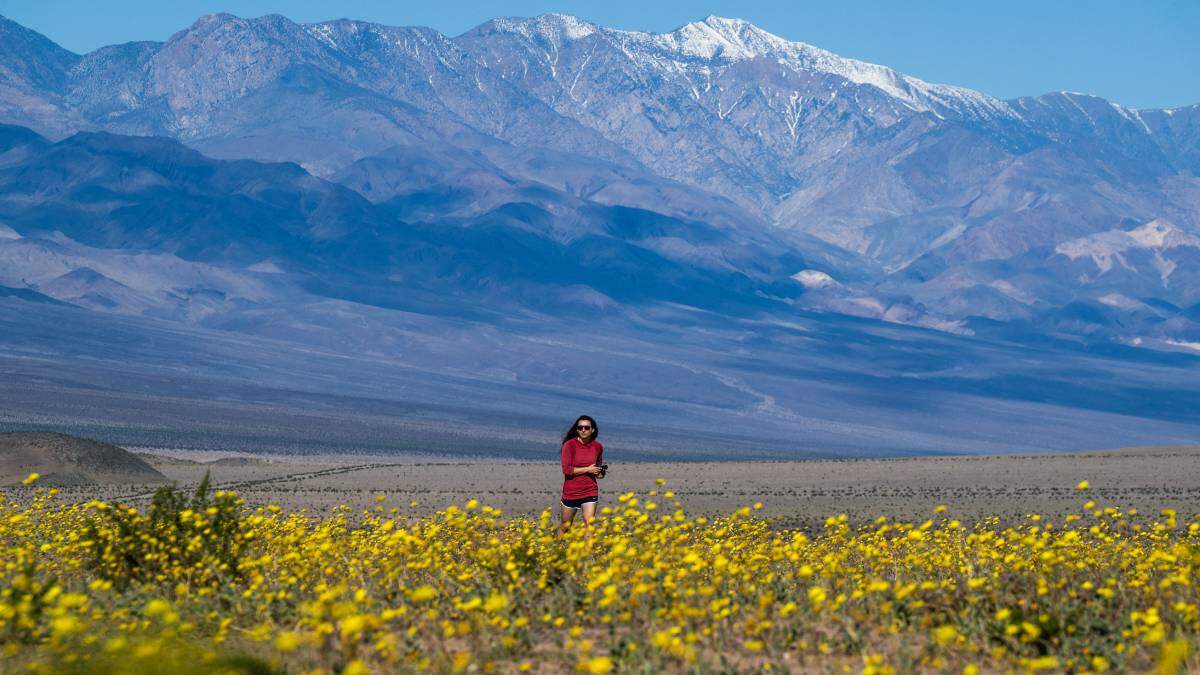

Death Valley National Park is experiencing its most spectacular wildflower superbloom in 10 years, transforming one of the harshest landscapes on Earth into a sea of pink, purple, and yellow color.
According to the National Park Service (NPS), this year’s bloom is the best the park has seen since 2016 — and it’s happening right now. The last three superblooms at Death Valley occurred in 2016, 2005, and 1998, making these large-scale events relatively rare.
Abby Wines, acting deputy superintendent at Death Valley National Park, said the secret behind this year’s show is simple: rain. Death Valley normally gets only about 2 inches of rainfall per year. But from November through early January, the park received about two and a half inches.
“From November through early January, we had about two and a half inches of rain, so we had more than our annual average in just two and a half months,” Wines said.
That extra moisture, combined with mild temperatures and calm winds heading into spring, set the stage for a once-in-a-decade bloom. At least three ingredients must come together for a strong wildflower year: well-spaced rainfall in fall and winter, warm enough temperatures, and manageable wind.
The flowers putting on this year’s show are called ephemerals — desert wildflowers that can spend years lying dormant as seeds in the soil, waiting for the right conditions to bloom. Once conditions are right, the seeds germinate, the flowers bloom and get pollinated, and then return to seed form — ready to wait out the next dry spell, however long it lasts.
The most common flowers on display include bright yellow desert gold, wavyleaf desert paintbrush, grape soda lupine, and desert star.
For anyone wanting to see the bloom, the window is closing fast. Wines said low-elevation wildflowers are expected to persist only through mid- to late March. Higher-elevation blooms are forecast to appear from April through June, though both timelines depend heavily on weather.
“The next few weeks will be the peak of the bloom,” Wines said. “By the time the higher elevations are blooming, there will be lots of flowers and they’ll be beautiful, but they’re going to be interspersed with bushes and plants, and it doesn’t create the same visually stunning landscape that you can see right now at low elevations.”
Park officials are reminding visitors to park only in designated areas, stay on marked trails, and never step on or pick the flowers. The 2016 superbloom drew more than 209,000 visitors to the park, causing traffic jams and some ecosystem damage. Officials hope visitors this year will help protect the landscape so the bloom can run its natural course.
Recent Comments