
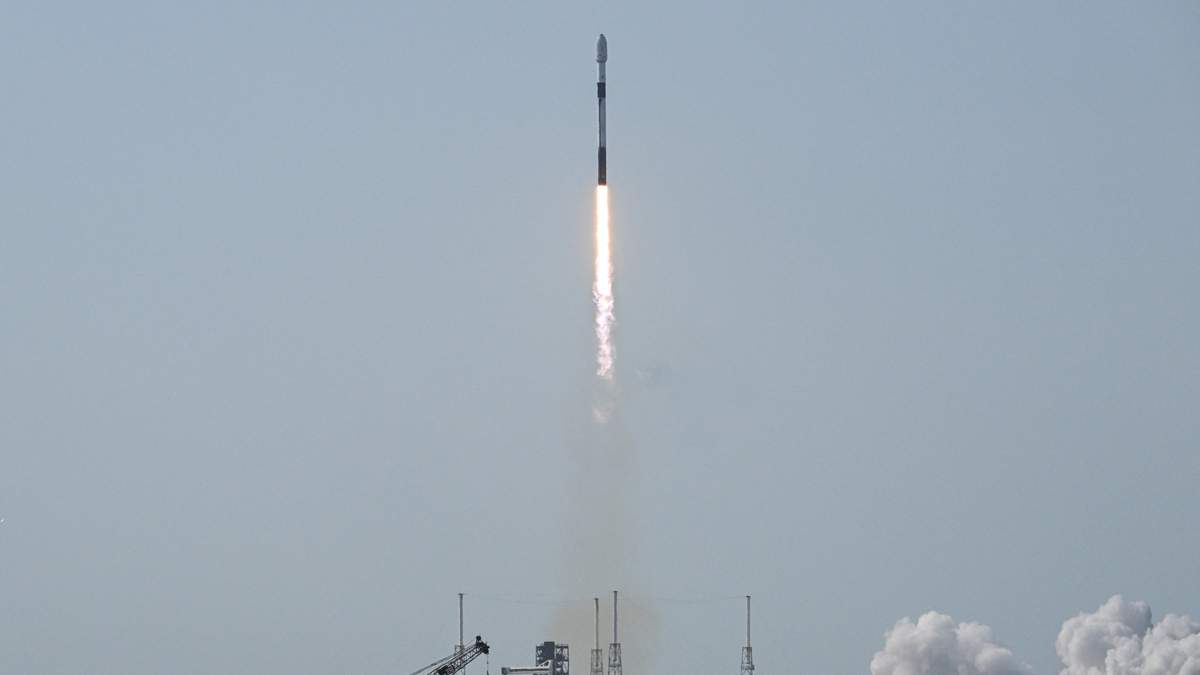

A piece of a SpaceX Falcon 9 rocket is expected to collide with the moon on Wednesday (August 5) near Einstein Crater, marking the second known instance of space debris hitting the lunar surface. The impact is anticipated at approximately 2:35 a.m. Eastern time, with the rocket part traveling at seven times the speed of sound, or about 5,400 mph.
The Falcon 9 rocket, launched in January 2025 from the Kennedy Space Center in Florida, carried the Firefly Aerospace’s Blue Ghost-1 and the Resilience lunar landers. After completing its mission, the rocket’s upper stage ran out of fuel and drifted in a chaotic orbit, eventually setting a collision course with the moon. The impact will create a crater estimated to be between 20 to 30 meters in diameter and about five meters deep, according to The Jerusalem Post.
Scientists see this unintentional collision as a rare opportunity to study the effects of a known impact on the moon. The event will likely generate a dust plume, which could rise several miles above the lunar surface and remain visible through telescopes for several minutes. NASA’s Lunar Reconnaissance Orbiter and South Korea’s Danuri spacecraft are poised to capture images of the impact site, as reported by Ground News.
The collision has sparked discussions about the need for improved management of space debris, especially as lunar activities increase. Experts suggest that abandoned rocket stages should be directed into stable orbits to prevent future hazards. According to The Dallas Express, the event underscores the growing need for better governance of space activities.
This impact follows a similar event in 2022 when a Chinese rocket stage struck the moon’s far side, creating a double crater. While the current collision poses no immediate threat, it highlights the challenges of managing debris in space as lunar exploration continues to expand.
Recent Comments