
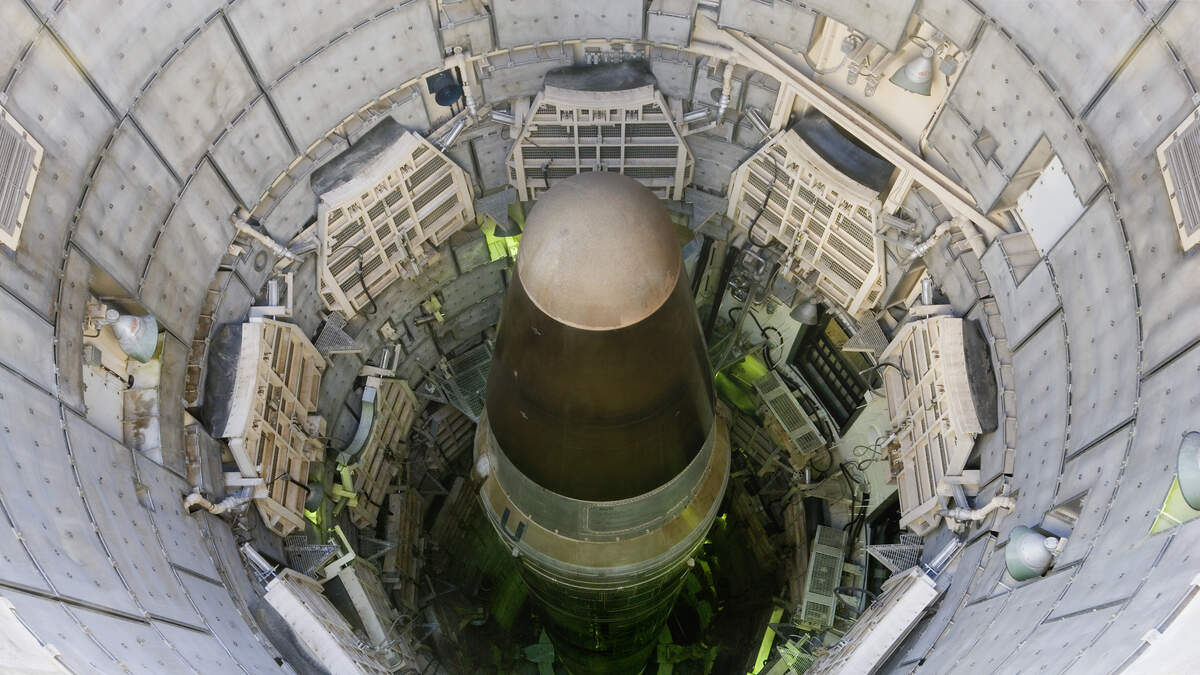

The world’s two largest nuclear powers no longer have any limits on their arsenals. At midnight on Thursday (February 5), a 15-year-old treaty called New START expired, and with it, caps on the number of weapons the United States and Russia could deploy on missiles, bombers and submarines.
In a statement, the White House did not directly address the end of New START but said that President Trump “will decide the path forward on nuclear arms control, which he will clarify on his own timeline.” The statement added that President Trump “has spoken repeatedly of addressing the threat nuclear weapons pose to the world and indicated that he would like to keep limits on nuclear weapons and involve China in arms control talks.”
New START was negotiated with Russia under President Barack Obama. At the time, the treaty was just the latest in a 50-year effort to bring down the number of nuclear weapons each side pointed at the other.
But New START did more than just put limits on warheads. The treaty established a whole system by which the U.S. and Russia notified each other every time they moved a nuclear weapon. The two sides even sent inspectors to nuclear sites.
The limits, notifications and inspections are all credited with creating a lot of stability between the world’s two largest nuclear powers.
The treaty was designed to run a decade, with an option for a five-year extension. Russia and the U.S. exercised the option to extend it in 2021, but the next year, Russia invaded Ukraine. That invasion derailed hopes for a new replacement treaty.
United Nations Secretary-General António Guterres warned that the expiration represents a “grave moment” for international peace and security. In a statement issued as the treaty expired, he said the world was entering uncharted territory. “For the first time in more than half a century, we face a world without any binding limits on the strategic nuclear arsenals” of the two countries, he said.
Guterres urged both sides to return to negotiations “without delay” and to agree on a successor framework that restores verifiable limits, reduces risks and strengthens global security. “The world now looks to the Russian Federation and the United States to translate words into action,” he said.
Last fall, Russian President Vladimir Putin offered Washington a one-year informal extension of the limits in New START to give negotiators more time to work out a formal agreement. President Trump still hasn’t taken Putin up on his offer. Addressing the impending demise of the treaty earlier this week, Kremlin spokesman Dmitry Peskov warned that it would be a “more dangerous” world without limits on U.S. and Russian nuclear arsenals.
Secretary of State Marco Rubio said on Wednesday the government would not consider arms control talks unless China participated. “The president’s been clear in the past that in order to have true arms control in the 21st century, it’s impossible to do something without China,” he said.
Recent Comments