
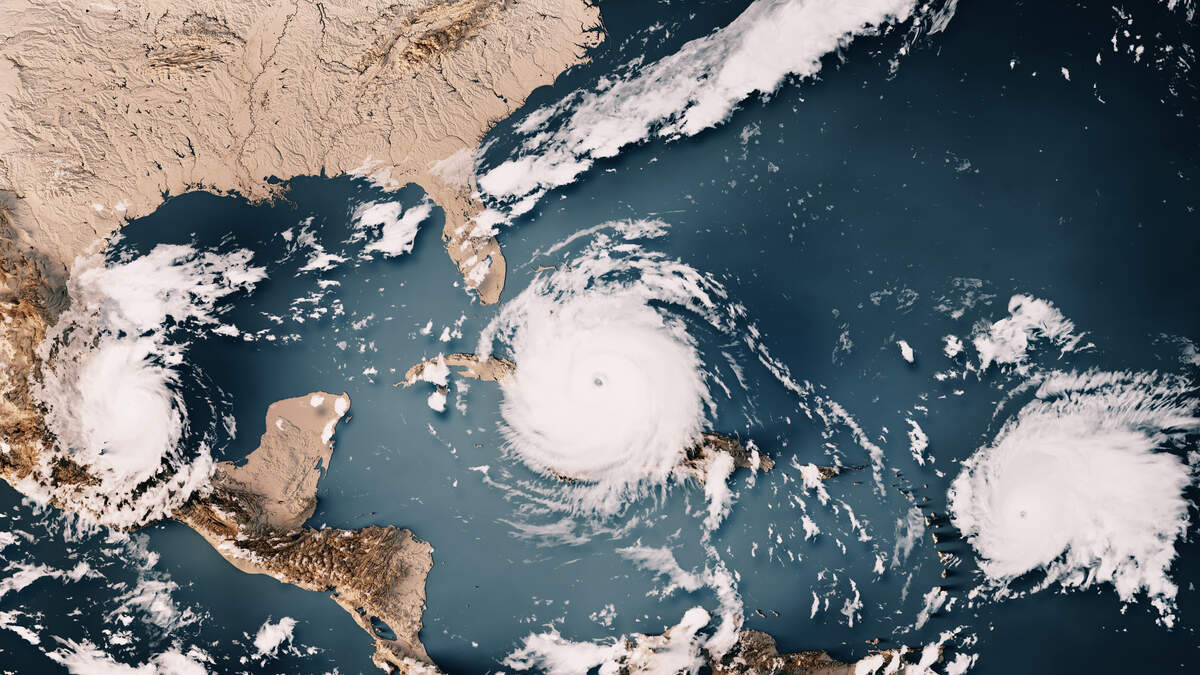

Forecasters at AccuWeather are urging all Americans to begin preparing now for the 2026 Atlantic hurricane season, warning that as many as five storms could directly impact the United States, even as a developing El Niño climate pattern is expected to keep the overall number of storms near or below historical averages.
According to AccuWeather, meteorologists expect between 11 and 16 named storms to form during the 2026 Atlantic hurricane season, which officially begins on Monday (June 1). Of those, four to seven are expected to become hurricanes, and two to four could reach major hurricane status, meaning Category 3 or stronger, with sustained winds of at least 111 mph.
Alex DaSilva, AccuWeather’s lead hurricane expert, said the number of storms may be lower than recent years, but the danger remains very real. “It’s very important that everybody from South Texas all the way to Maine prepares equally for each and every hurricane season, regardless of what the official forecast is,” DaSilva said. “Even if it’s expected to be a slightly below average hurricane season, we can still see major hits across the United States.”
AccuWeather forecasters identified the northern and northeastern Gulf Coast and the Carolinas as the areas facing the greatest threat of direct impacts this season.
AccuWeather forecasters reached their landfall predictions by studying 14 past years with atmospheric conditions similar to those expected in 2026, including 2009, 2014, 2018, and 2023. While the Texas coast faces a lower risk, DaSilva cautioned that it is not entirely out of danger.
One of the biggest concerns this season is rapid intensification, when a storm strengthens by at least 35 mph in a 24-hour period. Warm ocean water stretching hundreds of feet below the surface is fueling that risk.
The 2025 season offered a sobering preview. Though no hurricane made direct landfall in the US last year, the season still produced three Category 5 hurricanes, just one shy of the all-time record of four. Hurricane Erin in August 2025 caused severe beach erosion along the Atlantic Seaboard without ever making landfall, and multiple homes eventually collapsed into the ocean along North Carolina’s Outer Banks.
Warm Atlantic sea-surface temperatures could also trigger storm activity even before the official June 1 start of the season. Forecasters are watching closely for what they call “homegrown development,” where a storm stalls over the warm Gulf of Mexico, western Caribbean, or western Atlantic and rapidly transforms into a tropical cyclone with little warning time for coastal residents.
The 2026 Atlantic hurricane season will end on Sunday (November 30).
Recent Comments