

France is sending warships to the Middle East as part of a European-led naval mission to reopen the Strait of Hormuz, a critical waterway that has been nearly shut down since a broader regional war broke out on February 28.
French President Emmanuel Macron announced the mission Monday (March 9) during a visit to Cyprus, where he met with Cypriot President Nikos Christodoulides and Greek Prime Minister Kyriakos Mitsotakis. Macron described the effort as “a purely defensive, purely support mission” aimed at escorting container ships and tankers and gradually reopening the strait “after the end of the hottest phase of the conflict.”
The Strait of Hormuz is a narrow waterway in the Persian Gulf through which roughly one-fifth of the world’s crude oil passes. Maritime traffic there has nearly halted since the war began. “This is essential for international trade, but also for the flow of gas and oil, which must be able to leave this region once again,” Macron said.
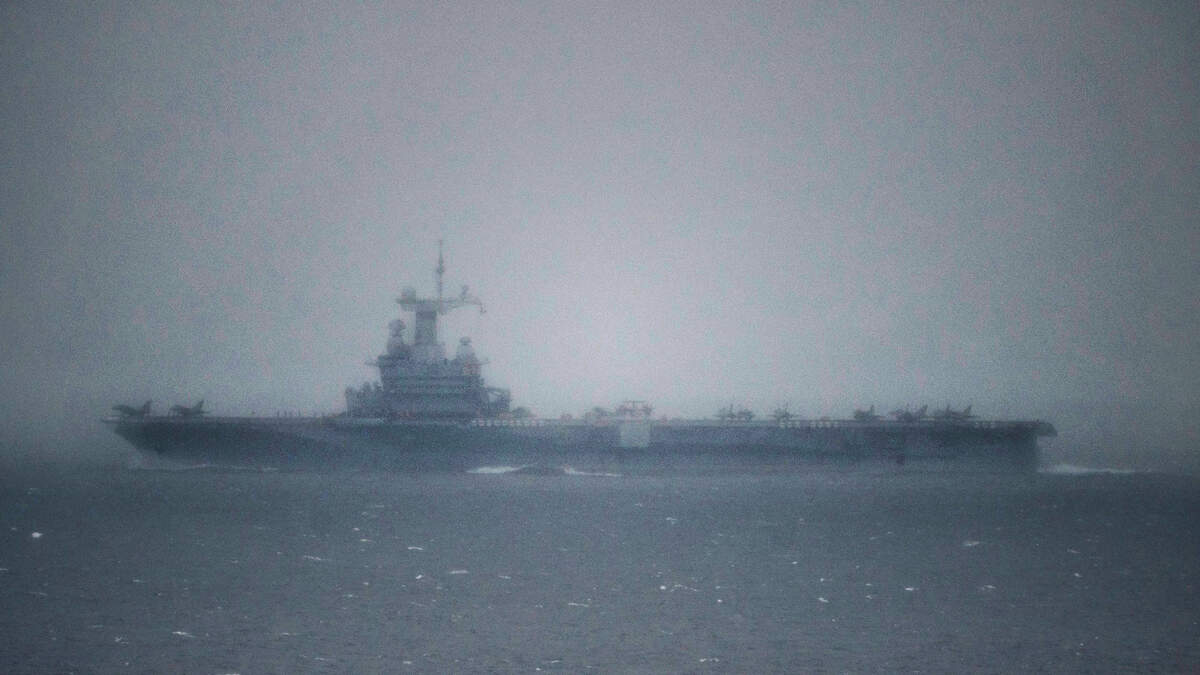
France pledged two frigates specifically to the Hormuz mission, which will include both European Union (EU) and non-EU navies. France’s total regional fleet will include eight frigates, two amphibious helicopter carriers, and the aircraft carrier Charles de Gaulle, which is currently stationed near Cyprus. Five additional frigates from Greece, Italy, the Netherlands, and Spain, along with a British destroyer, round out the coalition force. “This naval mobilisation is unprecedented,” Macron said.
Macron also drew a firm line around European territory during the visit, saying, “When Cyprus is attacked, it is Europe that is attacked.” The island nation — an EU member — was targeted by Iranian-made drones in early March, which triggered France’s deployment of the Charles de Gaulle strike group to the eastern Mediterranean. The drone strike also hit a UK military base on Cyprus.
Iran has warned it would attack European “targets” it believes are supporting US-Israeli military operations. On Monday (March 9), Iran also fired a second missile at Turkey, which was shot down by NATO air defenses. Jamie Shea, a former NATO official who now teaches war studies at Exeter University in the United Kingdom, said Iran is engaged in psychological pressure tactics. “Iran has to play psychological warfare as best it can and it is not surprising that it is trying to intimidate European governments,” he told EUobserver, adding, “why would Iran want to bring European strike capabilities down upon its head?”
Separately, Macron spoke by phone Monday (March 9) with Israeli Prime Minister Benjamin Netanyahu about conditions in the Middle East and Lebanon, according to his office. The EU also called on Israel to halt ground operations in Lebanon after the UN reported nearly 400 deaths there, including 83 children.
The EU said Monday (March 9) it was ready to “enhance” its naval operations to protect maritime traffic in the region.
No timeline has been set for when the Hormuz mission will begin active escort operations, with officials saying the effort will ramp up once the most intense phase of fighting subsides.
Recent Comments