
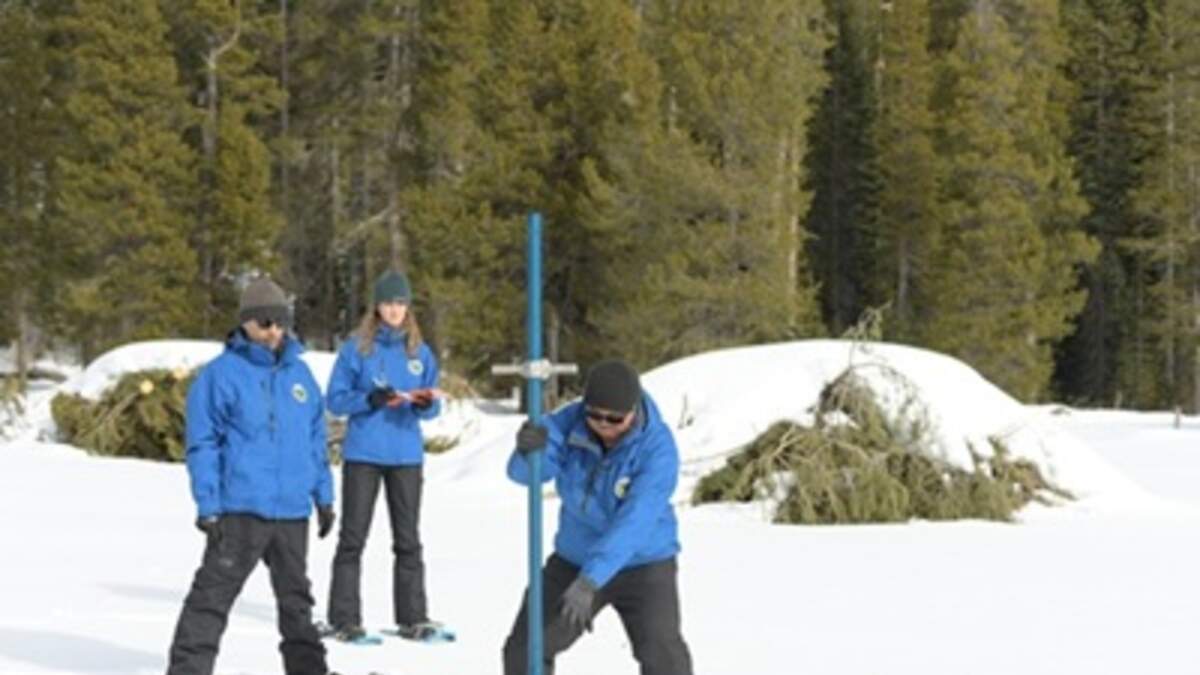

An unusually powerful March heat wave is rapidly melting California’s already depleted snowpack, raising fears that wildfire season could arrive far earlier than normal — while also putting pressure on water supplies heading into summer.
According to the San Francisco Chronicle, snowpack along the west shore of Lake Tahoe near Homewood completely disappeared on Friday, and a weather station in Tahoe City recorded zero snowpack the very next day — a full 40 days earlier than the typical melt-off date, per the California Department of Water Resources (DWR).
Tim Bardsley, a hydrologist at the National Weather Service office in Reno, called the rate of melting unprecedented. “A prolonged melt event such as this, at this time of year, has not occurred in recent history,” added Mike Imgarten, a senior hydrologist at the National Weather Service’s California-Nevada River Forecast Center.
Snow-measuring stations across California reported an average of just 47% of normal snowpack but 98% of normal precipitation as of last week — the state’s second-largest gap between snowpack and precipitation in more than four decades of records, behind only 2015. The northern Sierra is faring worst, with snowpack sitting at just 31% of normal.
Climate scientist Daniel Swain of UC Agriculture and Natural Resources said the situation fits a familiar pattern. “This is a classically climate change-tinged winter,” Swain said. “The snowpack is extremely low across much of the West, not because precipitation was extremely low … but specifically because temperatures were record warm. That is the classic signature of a warming climate on mountain snowpack.”
December through February was California’s second warmest on record, according to the National Oceanic and Atmospheric Administration. Bardsley described the year as a “warm snow drought” — a condition where near- or above-normal precipitation coincides with below-normal snowpack, caused by rain falling instead of snow, rapid warming, or both.
Monthly temperature records are forecast to break at Lake Tahoe from Monday (March 16) through Friday (March 20), with temperatures pushing into the 60s and low 70s across the Sierra Nevada. Even the summit of Mount Whitney could see above-freezing temperatures. Mount Shasta Ski Park, California’s northernmost ski area, has already announced it will not reopen this season, with its chief financial officer citing a “terribly warm” forecast.
The California Department of Water Resources says it’s not yet time to panic. California’s major reservoirs are sitting at capacity, and the entire state remains drought-free — for now. But large reservoirs like Shasta Lake and Lake Oroville rely on gradual snowmelt into late spring, and early runoff is difficult to capture because space must be kept available for potential late-season storms.
The bigger concern, officials say, would be a second consecutive dry year. Early snowmelt is strongly correlated with increased wildfire risk, as snow acts as a slowly drying sponge for forests throughout summer. Early melt could prolong wildfire season by removing a key buffer that keeps vegetation moist well into the warmer months. Spawning salmon are also at risk, as they depend on cold water flowing through fall.
The final snowpack survey of the year is scheduled for April 1. Looking further ahead, a UCLA study projects that spring snowpack in the Sierra Nevada could decline by nearly two-thirds by the end of the century if greenhouse gas emissions go unchecked — a decline that would shrink to around 30% if meaningful steps are taken to reduce emissions.
Recent Comments