
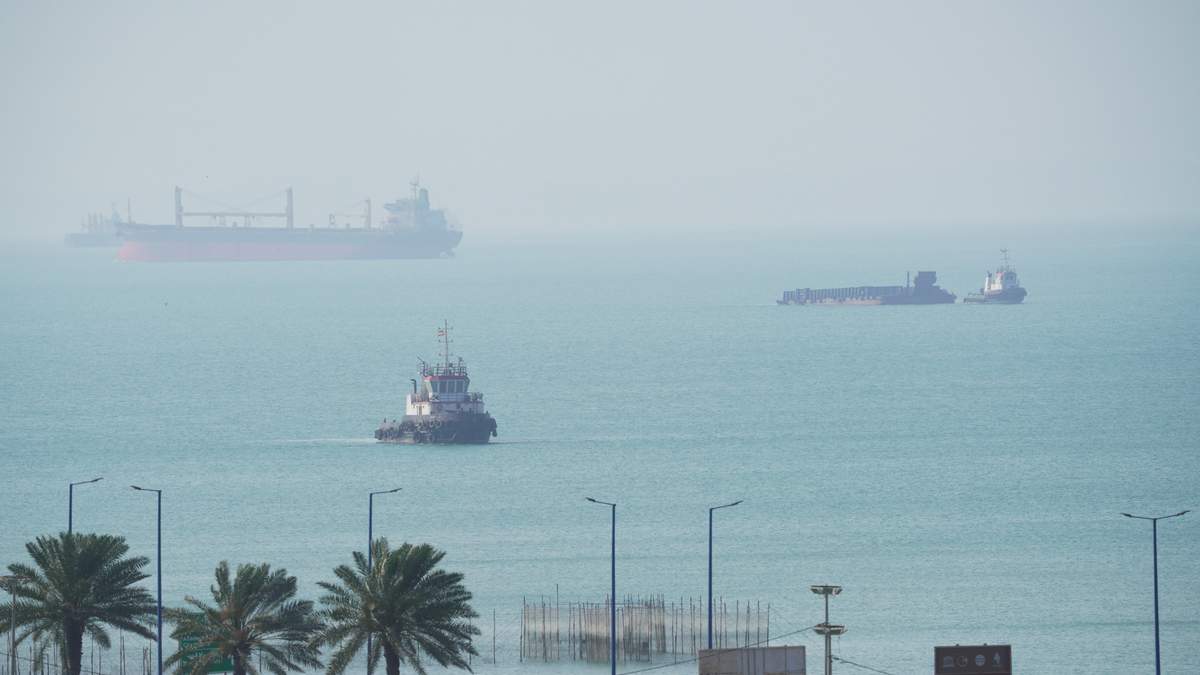

President Donald Trump said the ceasefire between the United States and Iran remains in effect after both sides exchanged fire near the Strait of Hormuz on Thursday (May 7), marking a tense moment in ongoing efforts to end the war. Trump told ABC News, “The ceasefire is going. It’s in effect,” and described the recent exchange as “just a love tap.” He warned that if peace talks fail, Iran would “have a lot of pain.”
U.S. Central Command (Centcom) reported that Iranian forces launched missiles, drones, and small boats at three U.S. Navy destroyers passing through the strategic strait. The U.S. military responded by intercepting the threats and striking Iranian military sites believed responsible for the attacks. Trump posted on Truth Social that the U.S. destroyed multiple small boats, missiles, and drones, and reiterated that further escalation would follow if Iran does not agree to a deal.
Iran’s top military command stated that U.S. forces had targeted an Iranian oil tanker and another vessel, as well as coastal areas in southern Iran, which it called a “violation of the ceasefire.” Iran said it responded by attacking U.S. military vessels and claimed to have inflicted “significant damage.” The two countries blamed each other for the incident.
Meanwhile, the United Arab Emirates’ Ministry of Defence reported intercepting a missile and drone attack from Iran, resulting in three moderate injuries. The Iranian navy also seized a Chinese-owned oil tanker, raising concerns in Beijing about shipping safety in the region.
Despite the clashes, both sides have avoided declaring the ceasefire over. Iran has not formally responded to the most recent U.S. ceasefire proposal, but officials indicate there are significant differences between the two parties. The U.S. proposal reportedly calls for Iran to halt uranium enrichment, hand over enriched uranium stockpiles, and accept phased sanctions relief, while Iran is seeking a full withdrawal of U.S. forces, guarantees against future attacks, and the release of frozen assets.
Iran’s parliament spokesperson called the U.S. document “more of an American wish-list than a reality.” Both sides have threatened escalation if their conditions are not met. However, diplomatic channels remain open, with Pakistan acting as a mediator, and both governments indicating a willingness to continue negotiations.
As of Friday (May 8), the ceasefire, in place since April 8, has survived another crisis, but the risk of renewed conflict remains if a permanent agreement is not reached in the coming days.
Recent Comments