
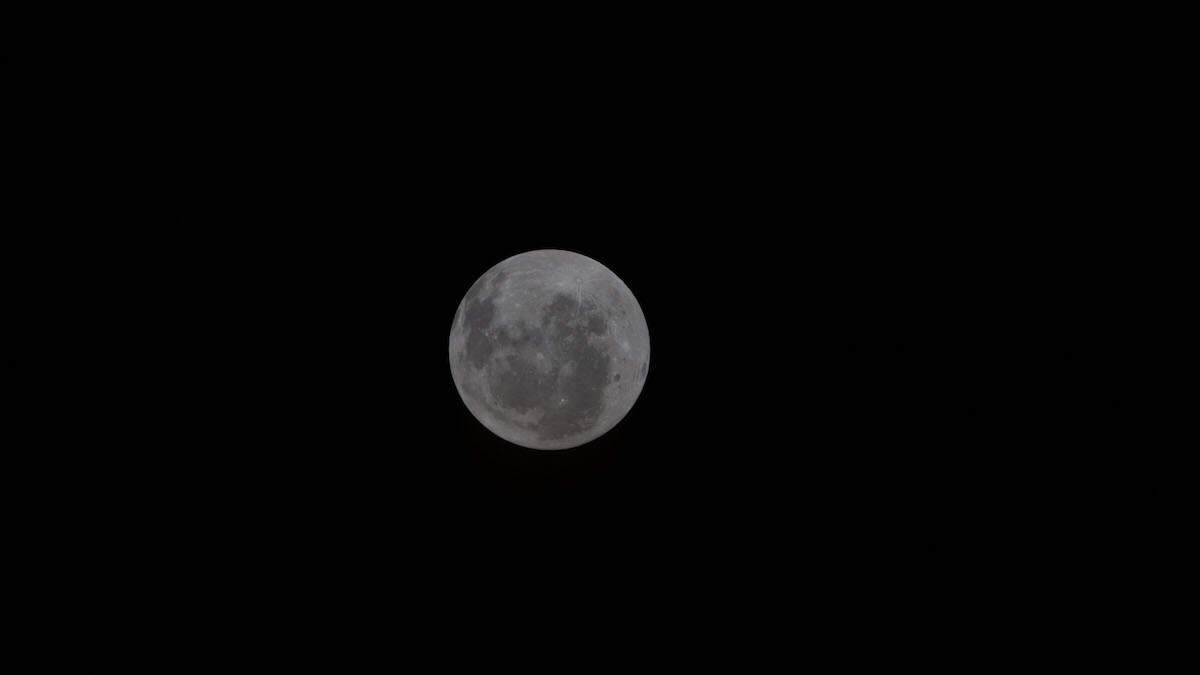

Astronauts onboard the Artemis II saw a never before seen side of the moon ahead of a historic lunar flyby expected to begin Monday (April 6) afternoon.
Orientale basin, a huge, black impact crater located on the moon’s far side, was in the vessel’s view on Saturday (April 4) and captured in photos as it continued its space voyage about 200,000 miles from Earth.
“History in the making,” NASA wrote on its X account along with a photo of the moon. “In this new image from our @NASAArtemis II crew, you can see Orientale basin on the right edge of the lunar disk. This mission marks the first time the entire basin has been seen with human eyes.”
The new photo served as the first of many historic glimpses from the four-person Artemis II crew during its 10-day mission around the moon as the highly-anticipated lunar flyby is expected to start at around 2:45 p.m. ET on Monday. The flyby is suspected to last just over six hours and conclude at 9:20 p.m. ET, with an estimated 40-minute communications blackout at around 6:47 p.m. when the moon will block signals from the ship and Earth.
The crew will then be flying around the moon at altitudes estimated to be between 4,000 and 6,000 miles, at which point the moon will appear to be the size of a basketball held at arm’s length through the view of the capsule windows and the far side of the moon will be seen by human eyes for the first time ever. The far side of the moon is perpetually locked from Earth’s view and hidden in shadow during every mission in which NASA astronauts have orbited in more than 50 years.
Recent Comments