
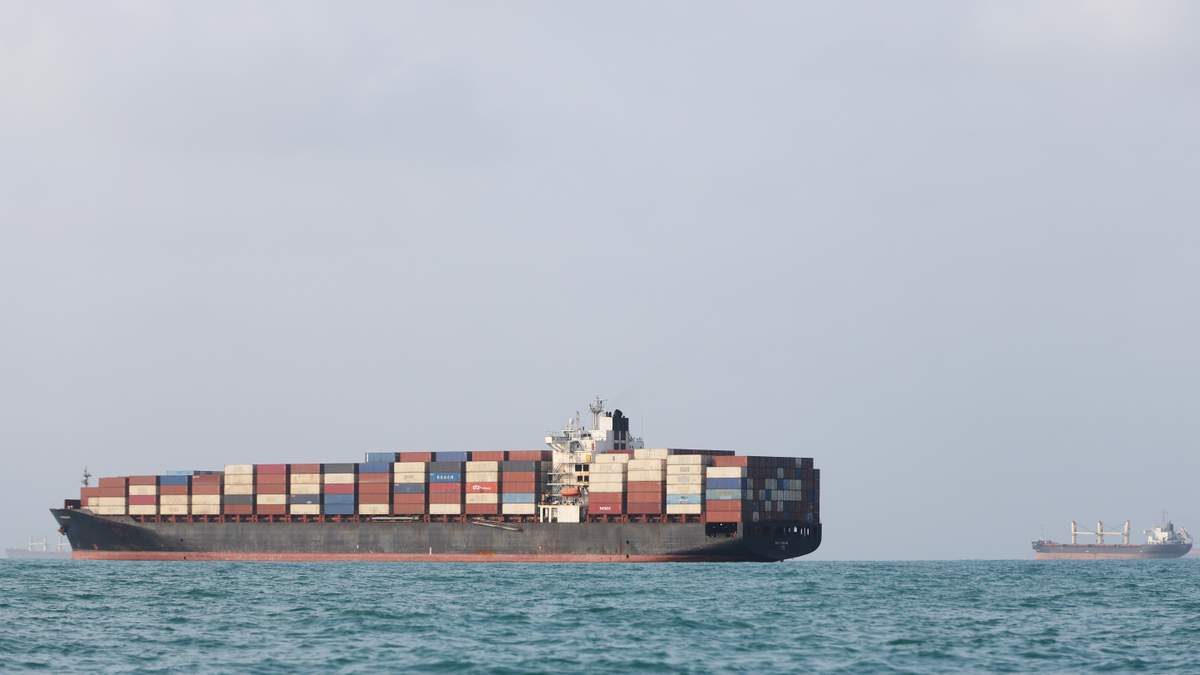

Iran has announced that the Strait of Hormuz will remain blocked until the United States agrees to its conditions. This statement came on Wednesday (August 12) after President Donald Trump claimed the U.S. had “total control” over the vital oil shipping lane. Both nations are demanding “reparations” from one another.
According to CNBC, data from a trade intelligence firm shows that ship traffic through Hormuz is at its lowest level since May, down about 90% from before the U.S. and Israel attacked Iran last February. On Tuesday (August 11), only a little over a dozen ships passed through the strait, compared to the daily average of 130 ships in February.
The conflict has led to a significant increase in oil prices, with U.S. West Texas Intermediate futures rising about 5% to $82.13 per barrel, and Brent crude settling around 5% higher at $87.72 a barrel. The U.S. and Iran had signed a memorandum of understanding in June to open Hormuz to commercial ships, but the deal quickly fell apart as disputes over shipping routes escalated into renewed fighting.
President Trump stated in an interview with Axios that the U.S. is “only semi-negotiating” with Iran, relying on a naval blockade to pressure Tehran rather than further airstrikes. Meanwhile, Iran’s Foreign Ministry spokesman, Esmail Baghaei, emphasized that the U.S. must lift its blockade for Tehran to consider reopening the strait.
The ongoing tensions have caused a dramatic decline in vessel traffic through Hormuz. Lloyd’s List Intelligence reported a 66% drop in vessel transits, while Kpler noted that traffic has fallen to single digits since the blockade began.
As the situation remains tense, the potential for further escalation could impact global oil markets, with analysts suggesting that oil prices could reach $100 a barrel if hostilities continue.
Recent Comments