
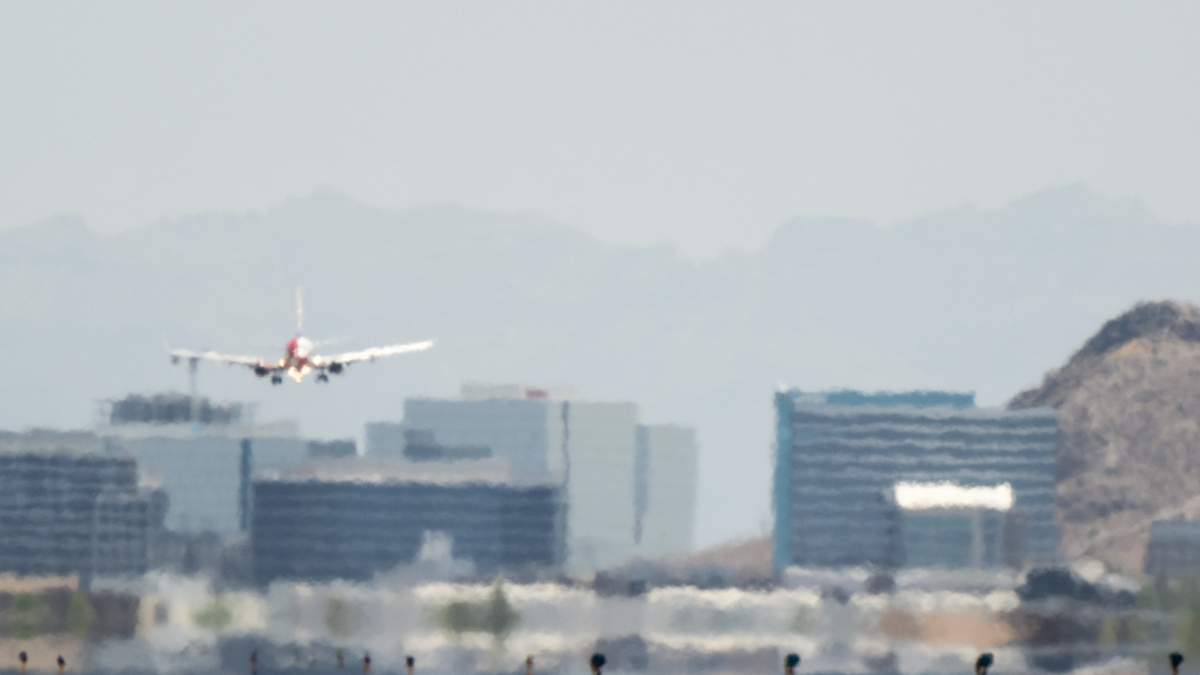

Extreme heat is causing more flight delays and passenger headaches across the United States, as airlines adjust schedules and reduce onboard weight to ensure safe takeoff procedures. Record-breaking temperatures this week have forced airlines to delay departures, lighten loads by removing passengers or luggage, and sometimes even cancel flights when cabin temperatures rise too high.
Experts say that on particularly hot days, the air becomes thinner—meaning there are fewer air molecules for aircraft engines to push against. This reduces both engine thrust and lift, making it harder for planes, especially fully loaded ones, to take off safely. According to Embry‑Riddle Aeronautical University’s Dr. Bob Thomas, “the heat reduces the density of the air. The density of the air is important for lift and engine thrust.”
These conditions often require airlines to lighten the aircraft, which can mean leaving behind baggage or even some passengers. “We’re leaving some bags behind or people behind in order to accommodate the high temperatures,” said Dr. Thomas. In extreme cases, flights may be canceled if safe takeoff cannot be ensured.
The effects of high temperatures are seen most clearly during takeoff and initial climb, when the reduced engine thrust means airplanes need more runway to get airborne. If a runway is too short for these conditions, airlines may have to reduce the plane’s weight or reschedule flights altogether. As a study from the University of Tennessee notes, past heat waves have led to cancellations and weight restrictions at major airports like Phoenix Sky Harbor International.
Aviation experts also warn that rising temperatures can have a ripple effect through the airline system, leading to more delays as ground crews and staff require additional breaks to stay cool, compounding schedule disruptions.
To avoid weather-related travel issues, experts recommend booking flights early in the morning or late in the evening, when temperatures are generally lower and the risk of delays is reduced. Airlines continue to monitor weather forecasts closely and make adjustments as needed, but with climate trends suggesting more frequent heat waves, travelers may need to prepare for ongoing disruptions during hot summer months.
Recent Comments