
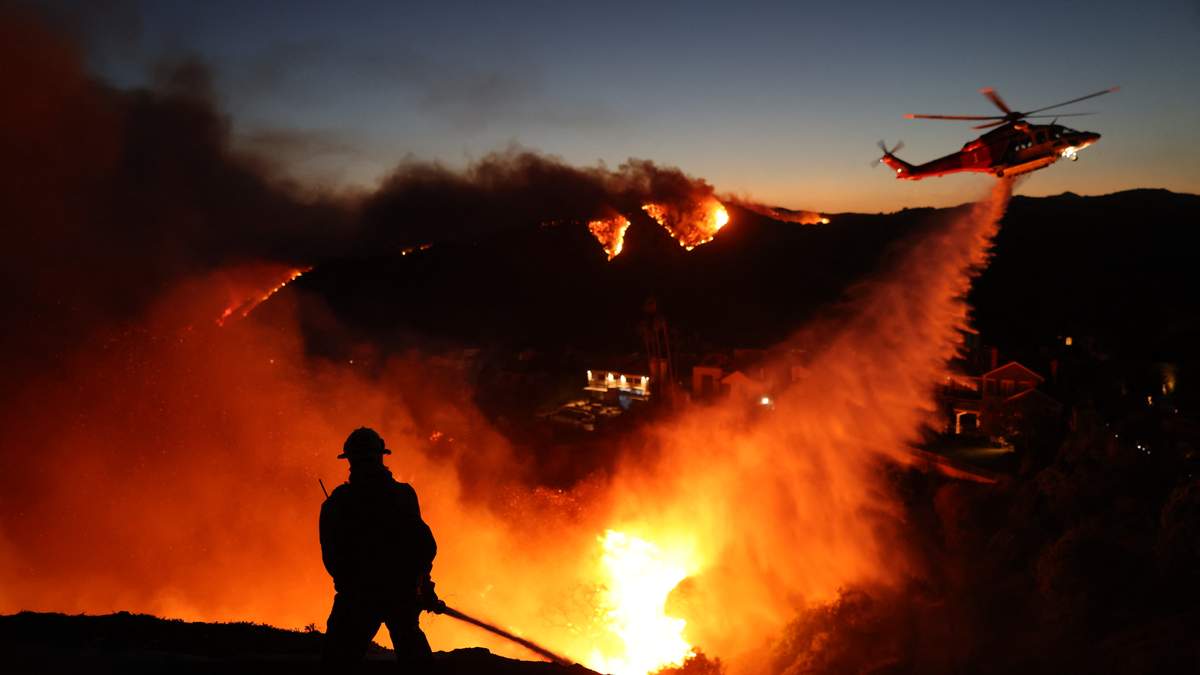

A recent study published in the journal Science Advances confirms a direct correlation between heatwaves and increased wildfire activity.
Researchers examined two decades of wildfire data from the Western United States, revealing that heatwaves—defined as three or more consecutive days with temperatures in the top 10% of hottest days—are significant drivers of wildfire spread.
According to the study, while heatwaves account for only 12% to 15% of warm-season days, they coincide with 42% of the total area burned by wildfires. During heatwaves, the area burned each day can be more than 50% larger than during cooler periods. In some regions, this difference reaches up to 300% as reported by the University of California.
Heatwaves exacerbate wildfire risk by drying out vegetation, increasing the atmosphere’s demand for moisture, and reducing nighttime humidity. These conditions allow fires to remain active longer and spread more easily. Additionally, heatwaves can lead to more lightning strikes, including “dry” lightning, which ignites fires without sufficient rainfall to extinguish them.
The study highlights the growing importance of understanding the link between heatwaves and wildfires, especially as climate change leads to more frequent and intense heatwaves. Since 2001, the number of heatwave days in Western U.S. forests has nearly doubled, contributing to a 2.5-fold increase in the area burned by wildfires. Without this rise in heatwave days, the cumulative burned area would be 37% smaller.
Professor John Abtazgolou from UC Merced emphasized the widespread impact, stating, “Not surprisingly, we find that when we have a prolonged period of warm temperatures, we see an uptick in fire activity. It’s not just in one location across the West; it’s pretty widespread.” This underscores the need for wildfire forecasts to incorporate heatwave data to better predict and manage fire risks.
Climate change continues to drive hotter and drier conditions, increasing the likelihood of wildfires. The Center for Climate and Energy Solutions notes that these conditions, along with human-driven factors like land use and forest management, contribute to the growing wildfire risk across the United States.
Recent Comments