

LOS ANGELES (CNS) – Attorneys are expected to return to court Friday to respond to a deadlock in jury deliberations in the closely watched trial of Palisades Fire arson suspect Jonathan Rinderknecht.
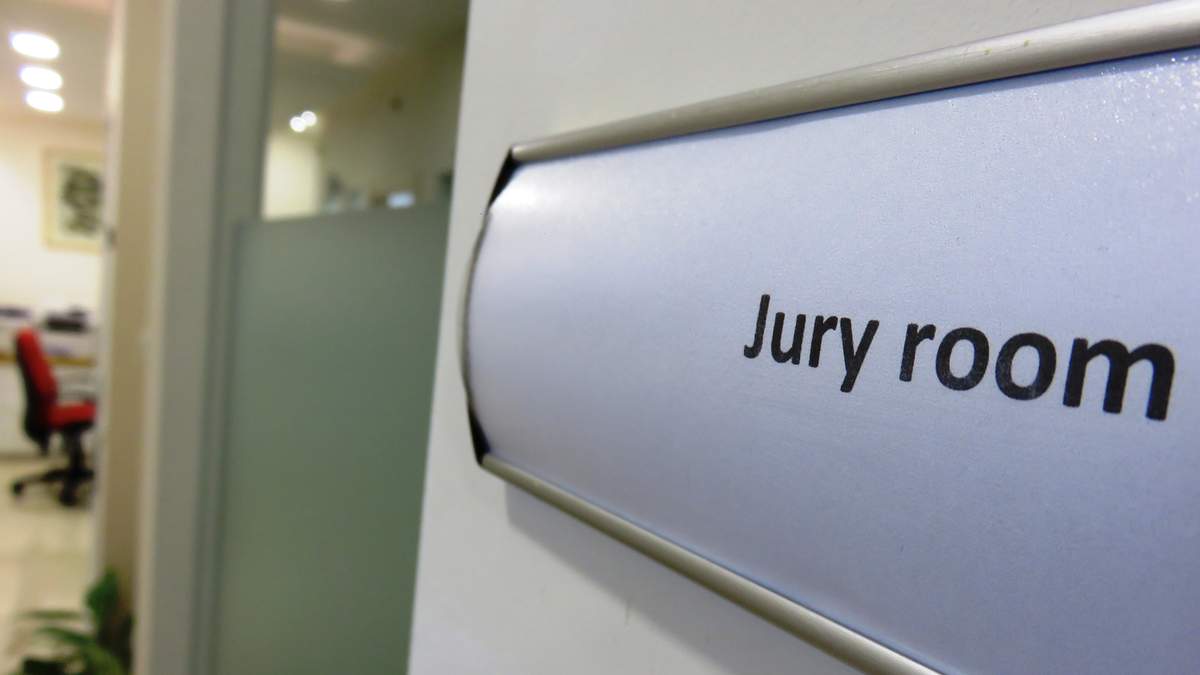
Jurors announced Thursday afternoon they were hopelessly deadlocked, telling the judge in the case the panel was at a “standstill” in deliberations and disagreeing jurors were “unwilling to change their opinion.”
A note to U.S. District Judge Anne Hwang stated, “There is nothing the court can do to assist the jury in their deliberations. Additional instructions or rereading the testimony would not help in deliberations. Unfortunately we cannot reach a unanimous verdict.”
The court day ended with Hwang telling attorneys to research a possible response to the deadlock and return Friday morning. It was unclear if the panel will be instructed to continue deliberating Friday or if a mistrial will be declared.
A spokesperson from the U.S. Attorney’s Office did not immediately comment.
The jury initially sent a note Thursday indicating it had reached a unanimous verdict. But that was followed by a second note saying, “We are at a standstill. We are unsure how to proceed.”
Over an hour later, the panel in Los Angeles federal court said it was still at a stalemate and further discussions would be useless, giving rise to the spectre of a mistrial.
During the 10-day trial, the jury heard evidence that the deadly Palisades Fire was a “holdover” fire — a continuation of the Lachman Fire that began early in the morning on New Year’s Day 2025. Although firefighters quickly suppressed the Lachman Fire — named for a street near the Skull Rock Trailhead — the fire continued to smolder and burn underground within the root structure of dense vegetation.
On Jan. 7, 2025, heavy winds caused the underground fire to surface and spread above ground in what became known as the Palisades Fire, which killed a dozen people and caused widespread damage in Pacific Palisades and Malibu.
Prosecutors used witness statements, video surveillance, cell phone data, and analysis of fire dynamics and patterns at the scene to try to show Rinderknecht intentionally set the Lachman Fire and then lied about it to investigators. The evidence was largely circumstantial.
Rinderknecht, 30, faces three arson counts: destruction of property by means of fire, arson affecting property used in interstate commerce, and timber set afire. The charges could bring up to 45 years in prison.
In his closing argument, defense attorney Steven Haney repeatedly returned to his main theme: that no hard evidence tied his client to arson, and the Lachman and Palisades fires were two separate events. The first fire was likely caused by errant New Year’s Eve fireworks, he told jurors, and the second blaze could’ve been arson.
According to Haney, Rinderknecht was on the trail near the Hidden Buddha clearing where the Lachman Fire was thought to have started, but the part-time Uber driver did nothing more than call 911 to report it.
In his summation Tuesday, the attorney insisted the Lachman Fire “could’ve started before Jonathan even arrived (on the scene). Nobody knows for sure when it started. Everyone is guessing. A man’s on trial and nobody knows when the fire started.”
Prosecutors told the panel that Rinderknecht, driven by anger, loneliness and a thirst for revenge against the wealthy, used a grill lighter to ignite hilltop vegetation around midnight on Dec. 31, 2024 at a remote, deserted area adjacent to the Pacific Palisades’ Summit neighborhood. That fire ultimately exploded into the deadly conflagration that wiped out much of the upscale community six days later.
Firefighters initially thought they had extinguished the Lachman Fire but instead it smoldered underground in the root system of brushes and trees before bursting into view as the Palisades Fire on Jan. 7, 2025, bolstered by strong Santa Ana winds, Assistant U.S. Attorney Danbee Kim said during her summation.
Rinderknecht “had a deeply entrenched belief that the wealthy were destroying the world,” she said, telling the panel in downtown Los Angeles that to the defendant’s way of thinking, “the Pacific Palisades neighborhood represented” the disparity between the rich and working people like himself.
Rinderknecht declined to testify in his own defense.
With testimony from more than two dozen witnesses, the prosecution painted a picture of Rinderknecht as a troubled man in the months leading up to the fire, increasingly distraught about failed relationships, low finances, the current administration, and a dystopian society he believed was ruled by cruel corporate overseers.
“After months of stewing in resentment at the rich and powerful” and “pouring his frustrations into ChatGPT,” Rinderknecht — then working as a part-time Uber driver in a rented car — lit the Lachman Fire, Kim said.
“He was the only one up there — he was the only one who could’ve lit that fire,” the prosecutor said.
The Palisades Fire killed 12 people, burned 23,448 acres, cost billions in damage and insurance claims, and ruined much of the exclusive Pacific Palisades community, destroying about 6,800 structures.
Prosecutors presented testimony explaining how law enforcement zeroed in on Rinderknecht in the weeks after the Palisades Fire.
Among other things, jurors heard audio of Rinderknecht ranting during a pre-arrest interview with federal agents about the wealthy and the supposed wall between the rich and low-wage workers.
“That’s what I disrupted,” he says at one point.
Haney asserted that although there were cameras taking time-delayed pictures of the scene and geolocational data appearing to trace Rinderknecht’s cell phone use as it corresponded to his exact location on the trail and at the Hidden Buddha clearing where the brush fire is thought to have begun, the surveillance “doesn’t show you anything.”
Discussing his client’s supposed “societal revenge” motivation, the defense attorney told the jury that “hating the rich is not a crime. Half of America hates the rich.”
The prosecution chose to end its case-in-chief last week not with a wealthy property owner, but with a small businessman who lost his restaurant in the fire.
During the eight-hour interview with investigators months before he was arrested but weeks after the fire, Rinderknecht lied about where he was on the trail when the fire began, Kim said in her closing argument.
Although saying he was at the bottom of the trail when he first noticed flames, geolocational and cell phone data showed he was just feet away from the flames at the top of the trail when the first sign of the fire was visible, she said.
Prosecutors contend the green grill lighter found in Rinderknecht’s rented car was used to set the blaze.
In pretrial hearings, Hwang ruled that the defense may not attempt to shift the blame for the Palisades Fire to the Los Angeles Fire Department, which has been blamed for allegedly failing to completely extinguish the Lachman Fire.
She also ruled that jurors would not be permitted to view images Rinderknecht created with ChatGPT showing burning fires while rich people enjoyed themselves behind a huge wall. “Too prejudicial,” according to the judge.
Recent Comments