
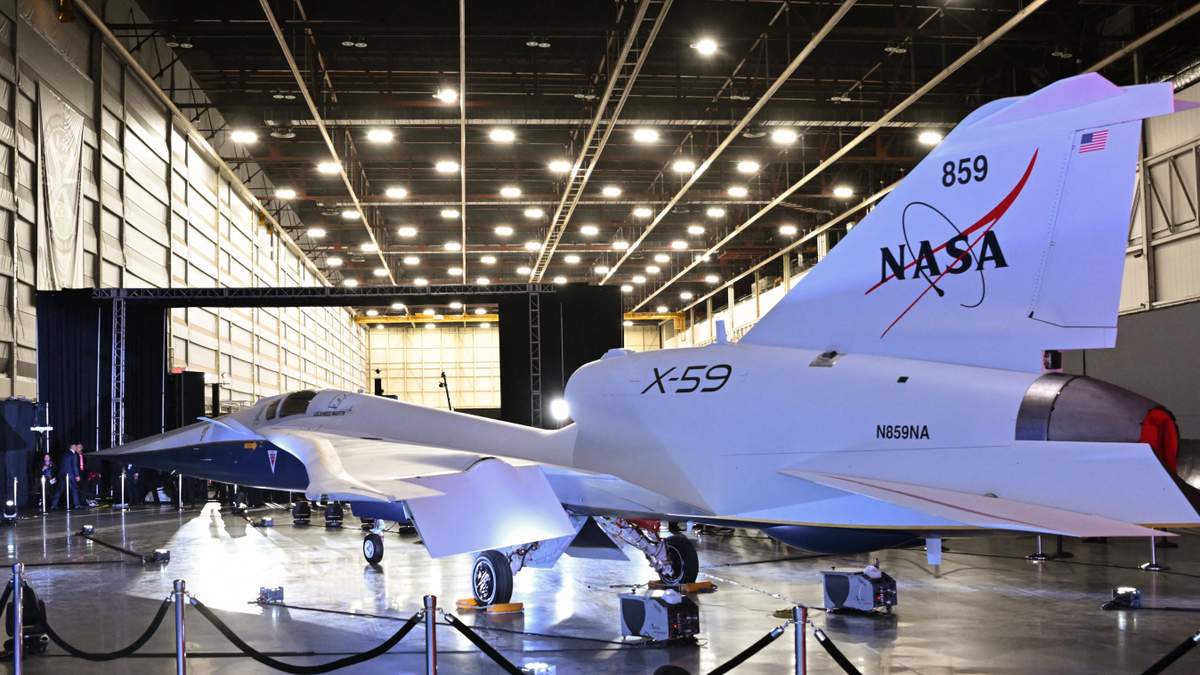

NASA’s X-59, a quiet supersonic research aircraft, is nearing its first flight, promising to revolutionize transatlantic travel by potentially reducing the flight time from London to New York to under four hours.
The aircraft is currently undergoing final safety checks at the U.S. Air Force Plant 42 in Palmdale, as it prepares for its historic inaugural journey.
The X-59 is designed to achieve speeds of Mach 1.5, approximately 990 mph, allowing it to complete the transatlantic crossing in about three hours and 44 minutes. This is a significant improvement over conventional commercial flights, which typically take seven to eight hours. The aircraft’s unique design aims to minimize the sonic boom, producing a quiet “thump” instead, making it suitable for flights over populated areas.
The development of the X-59 is part of NASA’s Quesst Mission, in collaboration with Lockheed Martin’s Skunk Works team. The mission seeks to gather data on community response to the aircraft’s quiet supersonic flight, which could help establish new noise standards and lift the ban on commercial supersonic travel over land. This breakthrough could open a new global market for faster air travel.
According to Express.co.uk, the X-59’s upcoming flights will include a series of test points to validate its performance under supersonic conditions. Cathy Bahm, project manager for NASA’s Low Boom Flight Demonstrator, stated, “Flying at supersonic speeds is a major milestone for the X-59 team.”
The aircraft is expected to achieve a maximum speed of Mach 1.6 (1,218 mph) and an altitude of 60,000 feet during its test flights. As MSU Exponent reports, these flights will help demonstrate the X-59’s capability to fly quietly at supersonic speeds, a critical step toward its future use in commercial aviation.
Recent Comments