
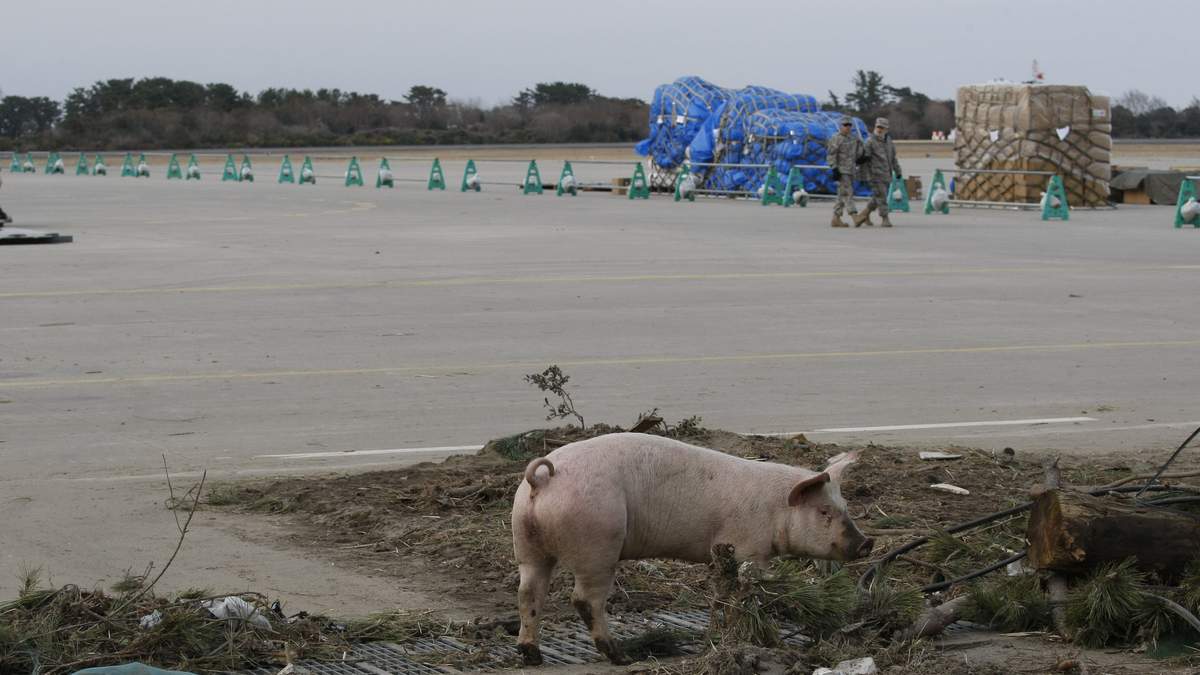

Mutant “super pigs” have emerged in the radioactive zone of Fukushima, Japan, developing surprising new abilities. These pigs are the result of domestic pigs escaping into the wild after the 2011 Fukushima nuclear disaster and breeding with wild boars. The Fukushima disaster was triggered by a 9.0-magnitude earthquake that struck northeastern Japan, causing significant shifts in the region.
A recent study led by Professor Shingo Kaneko from Fukushima University, published in the Journal of Forest Research, reveals that these hybrid pigs exhibit accelerated generational turnover due to maternal lineage. The study shows that domestic pigs’ rapid, year-round reproductive cycle, inherited through the maternal line, has led to faster genetic turnover in the wild boar population. This has resulted in the rapid dilution of domestic pig genes in the hybrids.
The research, conducted by analyzing mitochondrial DNA from 191 wild boars and 10 domestic pigs, highlights the impact of maternal inheritance on genetic introgression. The findings could have significant implications for wildlife management and invasive species control. By understanding how maternal lineages accelerate generation turnover, authorities can better predict and manage population explosion risks.
The Fukushima region, largely abandoned by humans after the disaster, provided a unique opportunity to study this hybridization event. The absence of human activity allowed wild boar populations to expand rapidly, with maternal inheritance playing a crucial role in the genetic changes observed. This mechanism is not limited to Fukushima and may occur in other regions where feral pigs and wild boars interbreed.
Recent Comments