
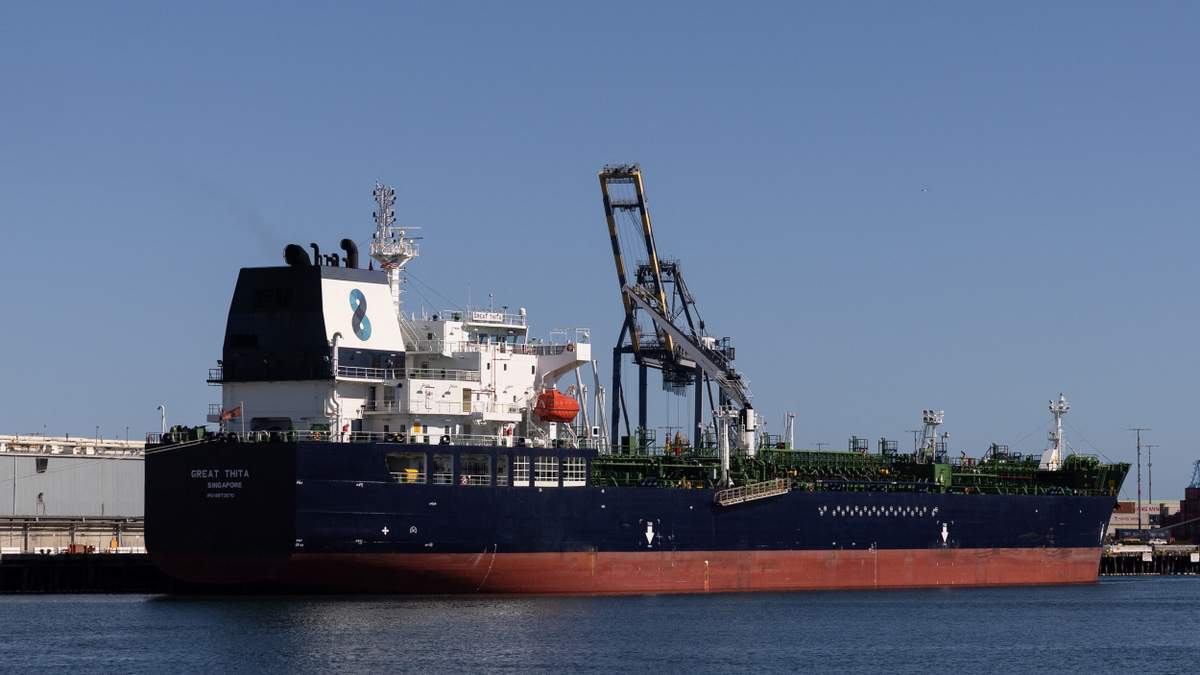

California is receiving gasoline from foreign-flagged ships for the first time in modern memory, following President Trump’s temporary waiver of the century-old Jones Act. The shift opens new pathways for fuel to reach the Bay Area and other parts of the state, including shipments from Gulf Coast refineries.
The Jones Act, passed by Congress in 1920 after World War I, prevents ships registered in foreign countries from transporting goods between U.S. ports. The law was designed to bolster American commerce and national defense, but it has had an outsize impact on California. The state has no pipelines bringing fuel in, leaving marine transport as one of the only import options. That relative isolation is one of several reasons California’s oil prices are higher than the rest of the nation’s.
President Donald Trump issued the waiver on March 18, and it will last until May 17, though the administration is now signaling it may extend the waiver longer, according to Axios. White House Press Secretary Karoline Leavitt said in a post on X that ”this action will allow vital resources like oil, natural gas, fertilizer, and coal to flow freely to U.S. ports for sixty days.”
So far, nine shipments of gasoline and other petroleum products have been sent to California: five to Los Angeles and four to the Port of Martinez, according to data from Vortexa, an energy analytics firm. Martinez is a major fuel distribution hub with a refinery in the city. The next shipment will arrive in Martinez on April 29.
The ships, registered to the Marshall Islands, Denmark and Liberia, came from Houston and Washington, as well as a local shipment up the Carquinez Strait from nearby Rodeo and Selby. A typical medium-range fuel tanker can carry up to 14.5 million gallons. Nationally, 44 voyages by foreign-flagged vessels have carried petroleum products between U.S. ports, according to Vortexa.
California energy officials said the waiver is bringing ”incremental supply” to the state, adding that the details are confidential under the law. Analysts say the waiver’s main benefit is flexibility. A Jones Act waiver ”addresses logistics, not supply,” one energy expert wrote in Forbes, noting that it allows fuel to move more easily between regions but does not increase overall production.
Some experts expect little effect on prices. ”All of your gasoline prices—40%, sometimes up to 50%—are based on the world market per-barrel cost,” William Doyle, a former member of the U.S. Federal Maritime Commission under the Trump and Obama administrations, told NPR, speaking about fuel markets broadly. ”It has nothing to do with the Jones Act.”
Jones Act waivers are rare and typically reserved for emergencies. The federal government has suspended the law after major disasters, including Hurricanes Katrina, Harvey and Maria. The current waiver is aimed at easing supply disruptions tied to tensions in the Middle East. Oil prices have risen sharply due to throttled traffic through the Strait of Hormuz, a critical artery for global petroleum shipments.
California’s high gas prices cannot be blamed solely on the Jones Act. The state runs on a specialized fuel blend mandated by the California Air Resources Board to reduce smog-forming emissions. The more specialized the fuel, the more expensive it is to produce. Sacramento also tightly regulates its oil and gas industry, from producers to refiners to retailers.
Californians pay the highest gas taxes in the nation. Between the state’s excise tax, the state sales tax, the federal excise tax and an underground storage fee passed on to consumers, Californians pay 90 cents per gallon in taxes and fees. Analyses have found that the cost impact of U.S.-flag shipping on gasoline prices is negligible, ranging from less than one cent per gallon to 1.5 cents per gallon.
As the waiver continues, the underlying drivers of high gas prices will remain. The fuel shipped by foreign carriers must still comply with California law, taxes and regulations, with all the costs those mandates entail. That reality does not change whether the vessel delivering the fuel sails under the American flag or a foreign one.
Recent Comments