
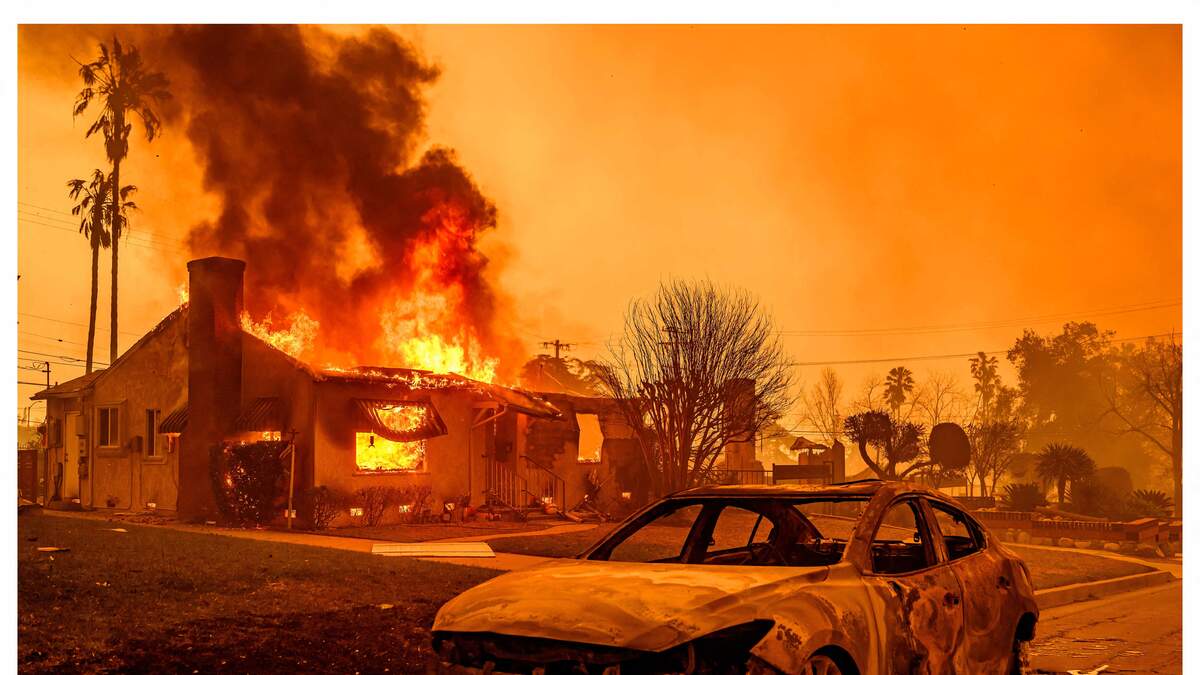

California lawmakers are moving forward with legislation to bring back a controversial fee on homeowners in high fire-risk areas, reigniting debates over who should pay for wildfire prevention in the state.
Senate Bill 1404 advanced out of the Senate Revenue and Taxation Committee Wednesday with a 3 to 1 vote, calling for an annual charge of up to $150 on hundreds of thousands of homeowners in areas where Cal Fire oversees fire management. The legislation now moves to the Senate Appropriations Committee for financial analysis.
The fee would affect roughly one-third of California’s residents, primarily those living in less developed, unincorporated areas where the state manages fire services. Revenue generated from the charge, estimated at $90 million annually, would fund Cal Fire’s fire prevention projects including forest thinning, property inspections, and hazard mapping.
State Senator Henry Stern (D-Sherman Oaks) authored the bill alongside Senators Ben Allen and Josh Becker. Stern acknowledged the proposal’s unpopularity but defended it as necessary. “The pie as it stands right now is too small, just inherently, to deal with the problems we’ve got,” he said. “I guess the thesis of this bill is we’ve got to try to do some uncomfortable things to grow that pie to address wildfire risk.”
The fire fee previously existed from 2011 to 2017, when it was created to offset Cal Fire’s costs during a budget downturn. The charge was suspended six years later amid significant opposition from rural residents and Republican lawmakers who viewed it as unfair taxation. Under a 2017 deal signed by then-Governor Jerry Brown, Democrats agreed to eliminate the fee if Republicans supported extending California’s cap and invest program, with funds from that program allocated to replace the lost revenue.
Today, however, the cap and invest program faces mounting financial pressures as more climate change programs compete for limited resources. Stern argues those programs shouldn’t be shortchanged to subsidize fire services for homeowners in high-risk areas.
Staci Heaton, senior policy advocate for the Rural County Representatives of California, voiced strong opposition at Wednesday’s hearing. “We’re asking people who didn’t cause this problem to pay for it,” she said. “These residents are already grasping with affordability issues.”
Critics note that many rural residents already pay local fire districts for services on top of state taxes, meaning they could face double or triple charges for fire protection. When the fee existed previously, residents within local fire agency boundaries received a $35 discount off the standard $152 state bill. Many rural homeowners also face rising costs for homeowner’s insurance and wildfire safety retrofits, making even nominal charges difficult to afford for those on fixed incomes.
The Howard Jarvis Taxpayers Association opposes the fee on constitutional grounds, arguing it constitutes a tax requiring a two-thirds legislative vote rather than a simple majority. The organization filed a lawsuit over the same issue in 2012 that was never resolved after the fee was dropped.
Environmental groups including the Environmental Defense Fund and Natural Resources Defense Council have registered support for reinstating the fee. They argue it will preserve funding for climate programs while ensuring adequate resources for fire prevention.
While the proposed fee could reach $150, lower rates are being discussed for residents in certain areas. Committee members suggested amendments including caps on administrative costs and reductions for residents who cannot afford the charge.
If approved, the fee would take effect at the start of 2027.
Recent Comments