
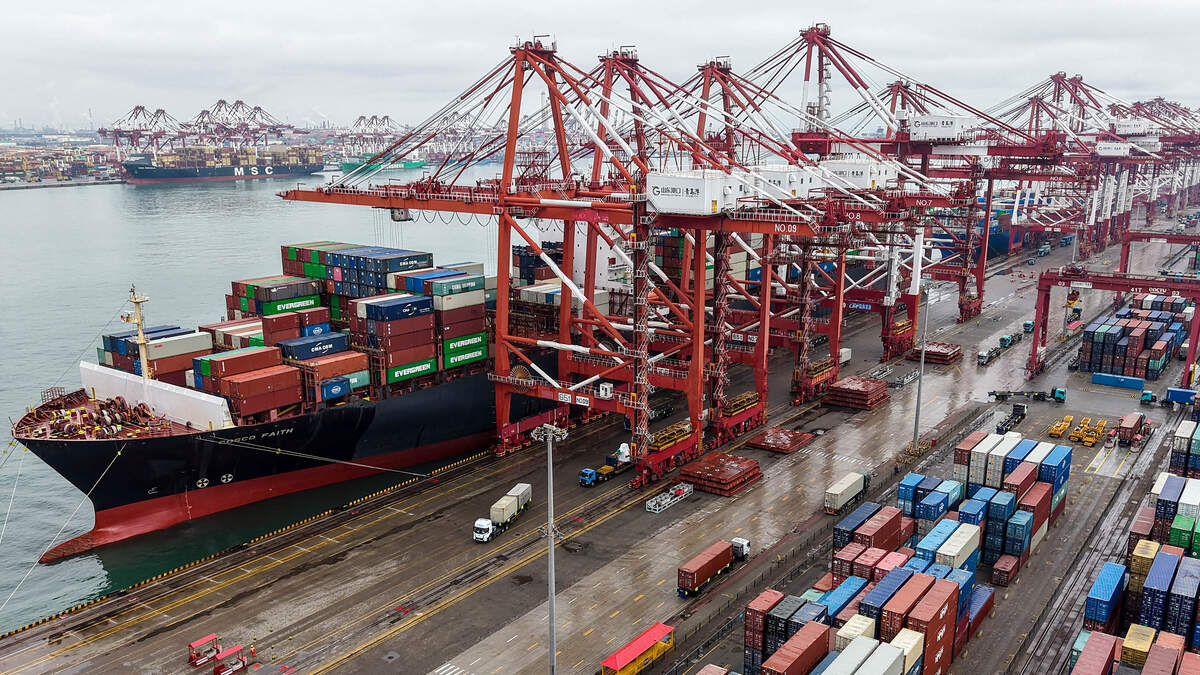

The Trump administration launched a refund system Monday (April 20) for businesses that paid tariffs later struck down by the Supreme Court. Importers and their brokers can now begin claiming refunds through an online portal that opened at 8 a.m. Eastern Time, according to U.S. Customs and Border Protection, the agency administering the system.
The portal launch represents the first step in paying back an estimated $166 billion in tariffs after the Supreme Court ruled in February that President Trump had overstepped his constitutional powers. The court determined that the International Emergency Economic Powers Act (IEEPA) does not authorize the president to impose tariffs.
More than 3,000 businesses, including FedEx and Costco, have sued the Trump administration to get refunds.
The new system, called Consolidated Administration and Processing of Entries (CAPE), allows companies to submit claims electronically. U.S. Customs and Border Protection said in court filings that over 330,000 importers paid a total of about $166 billion on more than 53 million shipments.
Companies must list the goods on which tariffs were levied. If CBP approves a claim, it will take 60 to 90 days for a refund to be issued, the agency said. Trade experts caution that payouts will take time and will require businesses to “jump through hoops.”
Only importers of record who directly paid tariffs can submit claims. Buyers who were indirectly hit with tariff increases, such as distributors who purchased products through a domestic supplier, cannot submit a claim through the portal. At least 17 lawsuits have reportedly been filed against companies by consumers who argue the companies would be wrong to keep any money they get back, demanding that refunds be passed on directly to consumers.
FedEx has suggested customers could be in line for refunds for overpaid tariffs while Costco has said it may pass on refunds in lower prices for consumers.
The CAPE portal will conduct a two-step validation of declarations. The system confirms that entry numbers are properly formatted, that the declaration was submitted by the importer of record, and that the file is not corrupted. If a declaration fails validation, it is rejected and the filer is notified.
The government has promised additional phases are coming for “more complex refund scenarios,” signaling that a wide array of tariff refunds will eventually be offered.
Recent Comments