

The United States and Iran are set to meet Thursday (February 26) in Geneva for another round of nuclear negotiations, as both sides signal cautious optimism — while also preparing for the possibility of military conflict.
Oman’s foreign minister, Badr al-Busaidi, confirmed the new round of talks. Oman previously hosted indirect negotiations between the two countries and helped facilitate last week’s discussions in Geneva.
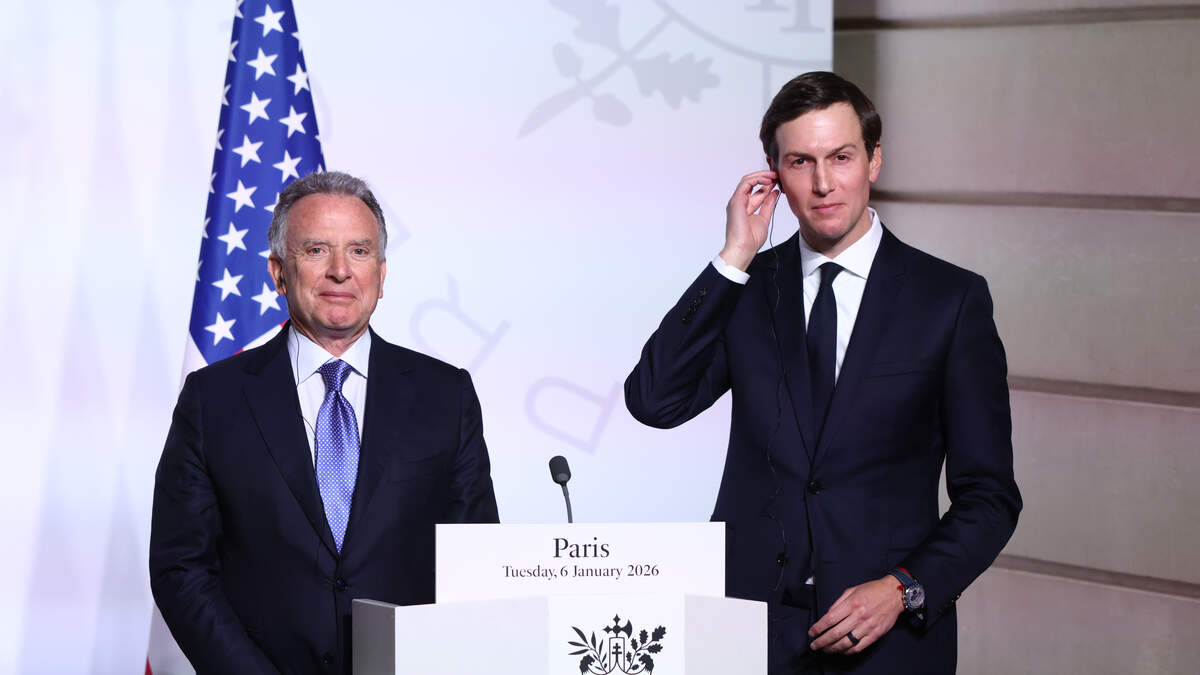
U.S. special envoy Steve Witkoff and Jared Kushner are expected to meet with Iranian Foreign Minister Abbas Araghchi in Geneva. Iran’s draft nuclear proposal is expected to be delivered before the meeting, with officials saying the U.S. is “ready to meet in Geneva in order to start detailed negotiations to see if we can get a nuclear deal.”
President Donald Trump warned last Friday that limited military strikes against Iran remain a possibility if talks fail. The Guardian reports that Witkoff expressed frustration over the weekend, saying President Trump is “curious as to why they haven’t capitulated” given the large U.S. military presence in the region.
Iran’s proposed framework would allow it to retain uranium enrichment for civilian purposes under a new verification regime overseen by the International Atomic Energy Agency (IAEA). In return, Iran would dilute its stockpile of highly enriched uranium, grant the IAEA full access to its bombed nuclear sites, and receive sanctions relief. Experts say Iran might be left with a theoretical right to enrich uranium, but with strictly limited practical capacity to do so.
Nuclear talks had been stalled for years after President Trump withdrew the U.S. from the landmark 2015 nuclear agreement in 2018. Iranian President Masoud Pezeshkian said Sunday that negotiations had involved “the exchange of practical proposals and yielded encouraging signals,” but stressed that Tehran has “made all necessary preparations for any potential scenario.”
The fresh round of talks comes as renewed anti-government protests have flared inside Iran. Student demonstrations broke out at universities in Tehran and the northeastern city of Mashhad over the weekend, coinciding with 40-day memorial ceremonies for thousands of people killed during a government crackdown in January. Iran’s state news agency confirmed students protested at five universities in the capital and one in Mashhad.
The U.S.-based Human Rights Activists News Agency says at least 7,015 people were killed during the previous protests and crackdown, including 214 government forces — a figure significantly higher than the Iranian government’s own count of 3,117. Iran has barred a United Nations fact-finding committee from entering the country.
The outcome of Thursday’s Geneva talks could shape whether the nuclear standoff moves toward a diplomatic resolution or escalates into direct military confrontation.
Recent Comments