
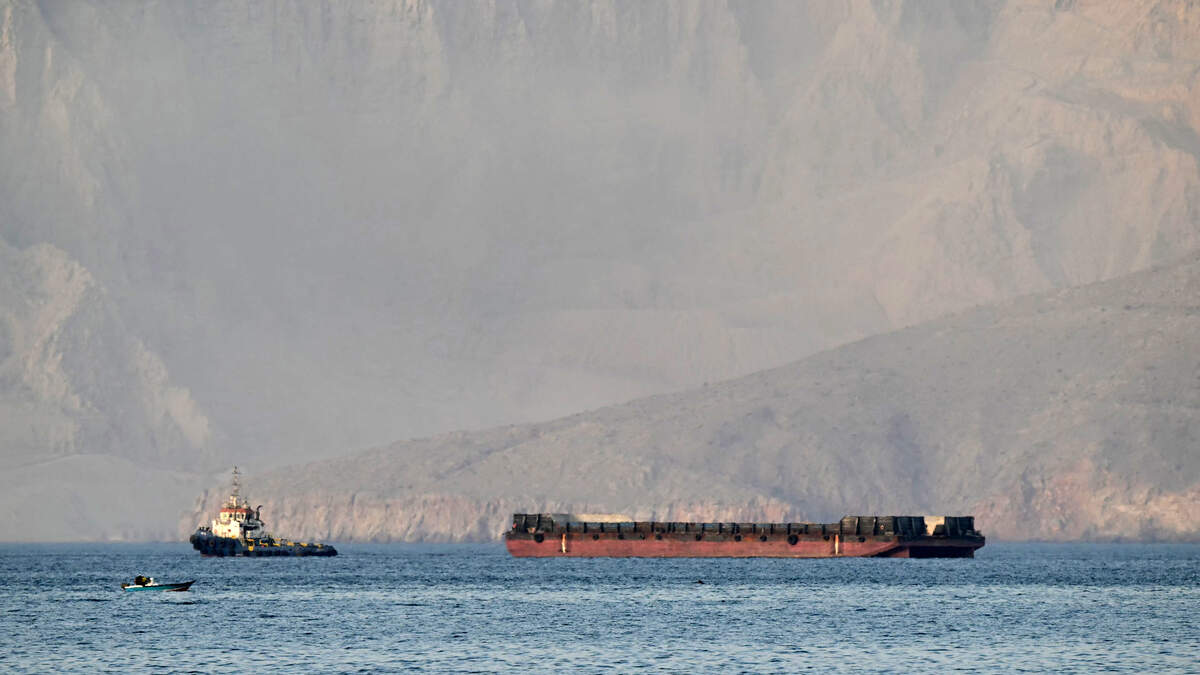

Iran has partially closed the Strait of Hormuz, one of the world’s most critical oil shipping lanes, as Tehran conducts military drills while simultaneously engaging in nuclear talks with the United States.
The Islamic Revolutionary Guard Corps (IRGC) began a military exercise dubbed “Smart Control of the Strait of Hormuz” on Monday, leading to the temporary closure of parts of the waterway on Tuesday (February 17). According to Iranian state media, the partial closure was implemented due to “security precautions” during the naval drills.
The timing is significant as it coincides with U.S.-Iran talks taking place in Geneva, Switzerland, where both sides are working to resolve ongoing disputes over Tehran’s nuclear program. This marks the first time Iran has shut parts of the strait since President Donald Trump threatened military action against Tehran in January.
“Drones deployed during the naval exercise of the Islamic Revolution Guard Corps in the Strait of Hormuz—capable of striking both aerial and maritime targets—are among the force’s newest strategic assets,” reported Fars News Agency, Iran’s semi-official news outlet.
The Strait of Hormuz, located between Iran and Oman, is a vital chokepoint for global oil markets. Approximately 13 million barrels of crude oil transited through the strait daily in 2025, representing about 31% of global seaborne crude flows, according to data from market intelligence firm Kpler. In 2024, oil flow through the strait averaged 20 million barrels per day, equivalent to about 20% of global petroleum liquids consumption.
Following the talks in Geneva, Iranian Foreign Minister Abbas Araghchi told reporters that Iran and the U.S. had reached an understanding of the “guiding principles” during the negotiations. However, he cautioned that this progress does not mean an agreement will be reached soon, noting that more work still needs to be done.
Energy market participants have been closely monitoring these developments, particularly as both the U.S. and Iran have increased their military presence in the region. Despite initial concerns, oil prices were trading lower by Tuesday afternoon, with international benchmark Brent crude futures falling 1.8% to $67.48 a barrel.
Recent Comments