
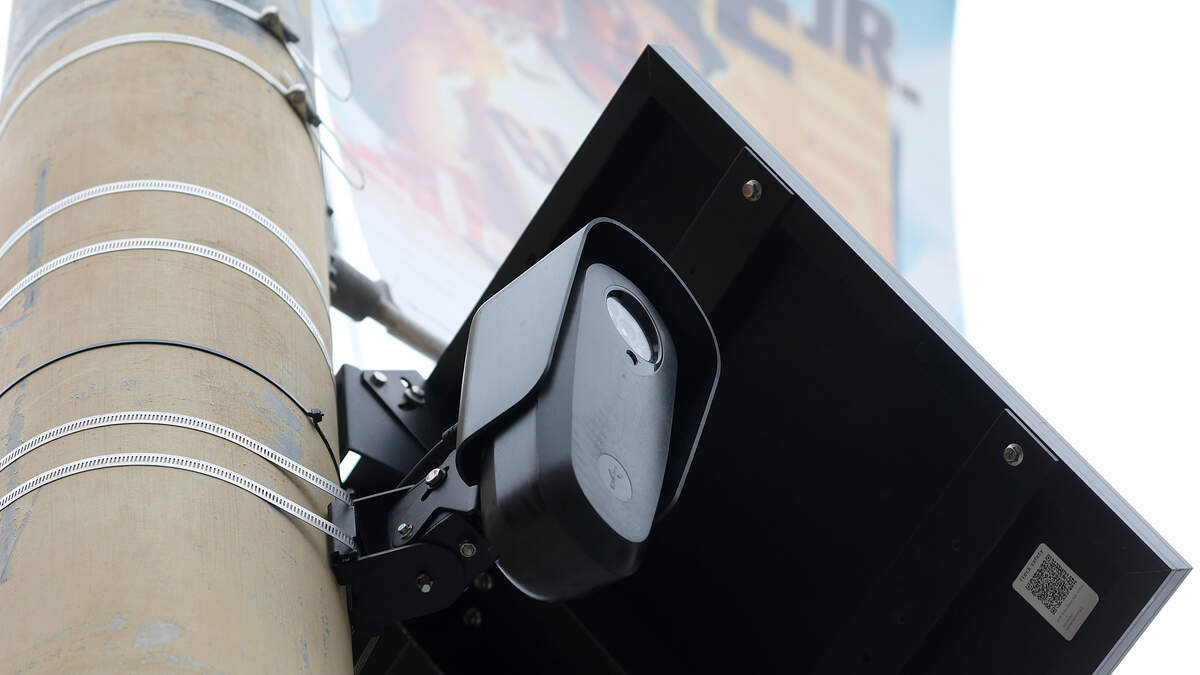

Privacy advocates are calling on Governor Gavin Newsom to remove covert license plate readers they say are feeding data to a controversial Border Patrol surveillance program.
More than two dozen organizations, including the Electronic Frontier Foundation and Imperial Valley Equity and Justice, sent a letter Tuesday urging Newsom to investigate, release permits, and remove approximately 40 license plate readers identified in San Diego and Imperial counties along the Mexican border.
“We ask that your administration investigate and release the relevant permits, revoke them, and initiate the removal of these devices,” the letter stated.
The controversy stems from an Associated Press investigation published in November that revealed U.S. Border Patrol had hidden license plate readers in ordinary traffic safety equipment. According to researchers, many of these devices in California are concealed inside construction barrels similar to those documented in Arizona.
The groups obtained permits showing both Border Patrol and the Drug Enforcement Administration had received permission from the California Department of Transportation to place readers along state highways. The collected data reportedly feeds into a predictive intelligence program that monitors millions of American drivers to identify “suspicious” travel patterns.
This surveillance system uses an algorithm to flag vehicles based on their routes and travel times. In one 2024 case documented in court records, Border Patrol stopped a driver partly because vehicle data showed it took six hours to travel approximately 50 miles between the U.S.-Mexico border and Oceanside, California.
“This type of delay in travel after crossing the International Border from Mexico is a common tactic used by persons involved in illicit smuggling,” an agent wrote in court documents.
Privacy advocates argue these surveillance practices raise serious constitutional concerns. While courts have generally permitted license plate reader use on public roads, they have limited warrantless government access to other tracking data like GPS devices or cell phone locations.
“Increasingly, courts have recognized that the use of surveillance technologies can violate the Fourth Amendment’s protections against unreasonable searches and seizures,” the organizations wrote in their letter.
U.S. Customs and Border Protection has previously defended the technology, saying it helps identify threats and disrupt criminal networks under “a stringent, multi-layered policy framework, as well as federal law and constitutional protections.”
As of Wednesday, neither the California Department of Transportation nor Governor Newsom’s office had responded to requests for comment about the letter.
Recent Comments