
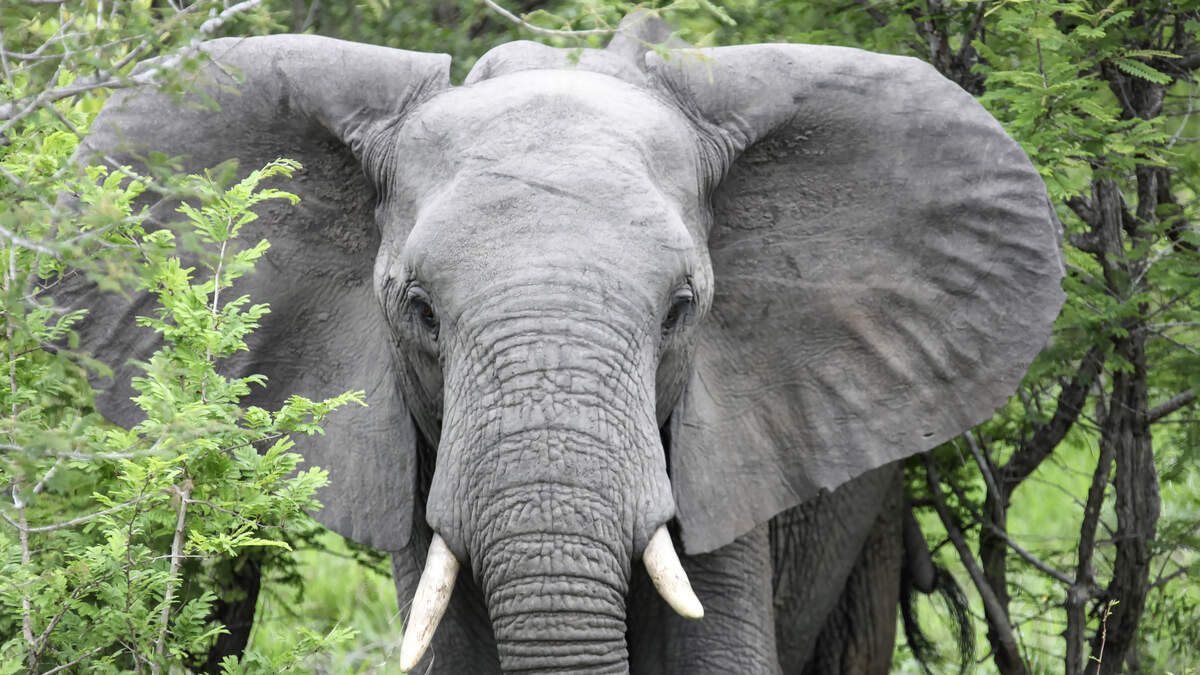

San Diego Zoo Safari Park’s newest attraction, Elephant Valley, will open on Wednesday, bringing visitors closer than ever to the park’s eight African elephants in a 13-acre-plus savanna designed to foster coexistence between humans and wildlife.
The immersive experience begins with a winding path that takes guests around and under felled trees, with aged gray tree hunks forming arches over bridges that tower above clay-colored paths marked with hoof prints. This entrance is designed to reorient visitors, making them feel as if they’re traversing a trail carved by elephants themselves.
“It starts by telling the story that elephants are ecosystem engineers,” says Kristi Burtis, vice president of wildlife care for the Safari Park, according to the Los Angeles Times.
The centerpiece of Elephant Valley is a curved bridge overlooking the savanna, allowing elephants to walk freely underneath visitors. Unlike traditional zoo exhibits, there are no visible fences or enclosures, creating a more natural environment where guests remain elevated while elephants roam below. The proximity is remarkable – visitors will be able to see the hairs on an elephant’s back, their eyelashes, and the muscular structure of their trunks.
At the heart of the experience stands the Mkutano House, a two-story lodge with open-air restaurants and bars. The name means “gathering” in Swahili, and the structure features natural design elements including Kenyan wood and beadwork. The ground floor offers close views of the elephant grazing pool, while the interior boasts a centerpiece tree beneath constellation-like lighting that mimics sunrises and sunsets.
“We’re not going to pretend that we’re taking people to Africa,” explains Fri Forjindam, a creative executive who worked on the Elephant Valley design. “That is a slippery slope of theming that can go wrong really fast. How do we recognize where we are right now, which is near San Diego? How do we populate this plane with plants that are indigenous to the region? The story of coexistence is important.”
The dining experience at Mkutano House includes three distinct destinations: Mkutano, Ona Lounge, and Tu Grill. The menus will blend African culinary traditions with global influences, though San Diego Zoo Wildlife Alliance recommends reservations for those wishing to dine in the space.
Beyond entertainment, Elephant Valley serves important research and conservation purposes. The Safari Park collaborates with organizations in Kenya, including the Northern Rangelands Trust, Loisaba Conservancy, and Reteti Elephant Sanctuary, studying human-elephant conflict and developing non-lethal solutions to protect both communities and wildlife.
With African savanna elephants listed as endangered by the International Union for Conservation of Nature, and only about 415,000 elephants remaining in Africa, these conservation efforts are crucial. The Safari Park’s research on young elephants and the endotheliotropic herpes virus provides valuable data that couldn’t be collected from wild populations.
Innovative features throughout Elephant Valley encourage natural elephant behaviors, including timed feeders to promote movement across the habitat and bee boxes at one entrance (bees are natural elephant deterrents that help prevent crop damage). Water areas have been redesigned with ramps and steps to improve elephant navigation.
As the San Diego Zoo Safari Park describes it, visitors will “experience what it’s like to coexist with this magnificent species” and “become part of a movement working to secure their future for generations to come.”
Elephant Valley is included with Safari Park admission and was made possible through donations from more than 5,200 contributors.
Recent Comments